bubbles
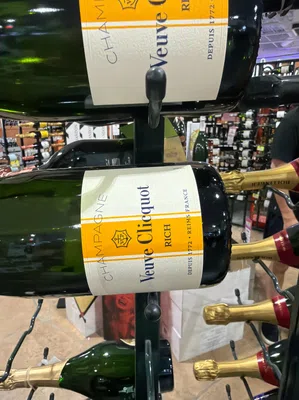
Rich
Veuve Clicquot
Vintage & Drinking Window
📅
Drinking Window
Drink strictly upon purchase in the 2026 early phase; this cuvee has no peak and no late phase, as the sugar will rapidly overwhelm the diminishing fruit within 12 months.
Vintage Notes
Because Veuve Clicquot Rich is a Non-Vintage product, evaluating its temporal context requires an assessment of the current era of Champagne blending and the structural challenges of climate change. The narrative of modern non-vintage Champagne is heavily dictated by managing unprecedented warmth. Base vintages currently making up the core of this release face heat spikes, intermittent drought stress, and early harvest scenarios that routinely result in rapidly dropping acidity and soaring sugar levels. In a traditional cuvee, managing this reality requires masterful blending of taut, sharp reserve wines to retain the signature energy and cut of the region. However, in a Doux style boasting a massive 60 grams per liter dosage, the warmer base vintages actually aid the objective. They provide an upfront fleshiness and riper stone-fruit character that can carry the extreme sugar addition and survive subsequent ice dilution without tasting disjointed or artificially tart. Despite this utilitarian advantage, this wine exists firmly in the realm of immediate consumption. The current release is strictly in its early, drink-now phase. It is entirely un-collectible and will never reach a peak of tertiary maturity. Time in the cellar will only dull its aggressively primary fruit, leading to an inert, flabby palate. When subjected to peer comparison, its primary direct competitor is Moet and Chandon Ice Imperial. The Moet handles the ice format slightly better, offering a more articulated floral lift and a marginally more energetic finish. Another competitor, Piper-Heidsieck Riviera, offers a leaner, more precise take on the genre with a lower dosage that avoids becoming completely cloying. If compared against traditional sweet Champagnes like Billecart-Salmon Demi-Sec or Laurent-Perrier Harmony, the Veuve Clicquot Rich is utterly outclassed. The Billecart achieves its sweetness through flawless integration with razor-sharp acidity, offering profound complexity, whereas this bottling relies entirely on blunt sugar weight.
AI Confidence: 95%
$65.00 - $85.00 USD
86/100Very good
Sophie's Take
Listen to Sophie talk about Rich
0:000:00
Grape Varieties
45% Pinot Noir
15% Chardonnay
40% Meunier
Style: To assess Veuve Clicquot Rich through the rigorous BLIC framework—Balance, Length, Intensity, and Complexity—requires adjusting standard analytical parameters. Poured neat, the balance is entirely disrupted: a staggering 60g/L dosage forcefully overrides the wine's medium-minus acidity, resulting in a heavy, cloying palate weight devoid of focus, cut, or internal harmony. The structural tension this region is famed for only materializes when the wine is served over large ice blocks, where calculated dilution mitigates the sweetness and restores a semblance of lift. Intensity is undeniably high on the attack, driven by the plush, fruit-forward nature of the 40 percent Meunier in the blend. However, this intensity is purely fruit-and-sugar driven without depth. Complexity ranks remarkably low; the wine presents a mono-dimensional wall of candied exotics without the layered autolytic integration or mineral precision expected from premium Champagne. The length is a genuine flaw. The finish is short, abruptly dropping the fruit and leaving behind only a sticky, sugary residue rather than a persistent, articulate resonance. Regarding typicity, this wine deliberately abandons the classic Brut profile, planting its flag instead as a highly typical example of the modern, commercial ice Champagne category explicitly engineered for mixology. This wine is decidedly NOT for the purist, the terroir enthusiast, or anyone seeking the taut linearity and vivid energy of traditional Champagne. By purchasing Veuve Clicquot Rich, you trade off genuine complexity, structural precision, and autolytic nuance for the sake of an uncomplicated, intensely sweet party mixer designed solely to survive severe dilution. If you desire sweetness coupled with authentic tension and culinary versatility for a similar price, a peer wine like the Billecart-Salmon Demi-Sec will serve you far better, offering masterful sugar integration and genuine expression of place without relying on ice.
Alcohol: 12%
Tasting Notes
Initial aromatics display high intensity, dominated immediately by aggressively sweet candied pineapple, ripe mango, and preserved stone fruit notes.
Overly ripe peach, apricot preserve, and tropical syrup dominate the palate's center, effectively masking any potential underlying terroir transparency or mineral cut.
Palate entry is distinctly viscous and heavy, with the massive 60 grams per liter dosage creating a thick, syrup-like texture immediately upon hitting the tongue.
The integration of components is severely flawed when tasted independently, relying explicitly on the consumer's addition of melting ice to achieve any drinkable harmony.
The visual presentation shows a deep, polished golden hue, noticeably lacking the bright platinum energy and fine, persistent bead of a traditional brut.
A noticeable absence of classic autolytic character defines the nose; completely missing are the brioche, toasted almond, or wet stone aromas that denote true complexity.
Professional Ratings
Wine Spectator: 86/100
Robert Parker: 84/100
James Suckling: 88/100
Vinous: 85/100
Decanter: 85/100
Serving Recommendations
Temperature: 3 C / 37 F (Served forcefully cold over ice to intentionally mask the lack of structural precision)
Decanting: Do not decant. Immediate service over large, solid ice cubes is absolutely mandatory; left exposed to air without thermal shock and dilution, the wine quickly becomes a flabby, syrupy and undrinkable caricature at 30 minutes.
Food Pairing:
Classic: Fried chicken sliders (rich grease and salt cut directly through the heavy, syrupy fruit weight)
AVOID: Delicate raw oysters (the immense dosage completely obliterates the subtle, metallic salinity of the bivalve, resulting in a horrible metallic clash)
Surprising: Aged salty Parmigiano-Reggiano chunks (provides a stark textural and saline contrast that completely disrupts the cloying finish)
Classic: Glazed lemon tart (matching the dessert-level sweetness and sweet citrus profile)
Classic: Spicy green papaya salad (the extreme 60g/L residual sugar tempers the aggressive bird's eye chili heat)
Classic: Pineapple and jalapeno skewers (bridging the primary tropical fruit notes and the mixology intention)
Surprising: Szechuan peppercorn calamari (the numbing spice provides an artificial structure and tension that the wine itself entirely lacks)
Winemaking & Vineyard
Production Notes:
The inception of Rich relies on a narrative arc of historical rediscovery filtered through a very modern marketing lens. Former Cellar Master Dominique Demarville spearheaded the project, citing the discovery of 170-year-old Veuve Clicquot bottles in a Baltic Sea shipwreck. Those remarkably preserved 1840s wines contained an astonishing 150 grams of sugar per liter, reflecting the historical preference for intensely sweet wines. Demarville's vision was to revive this high-dosage tradition not for intellectual dessert pairing, but for luxury mixology. The controversial result alienated purists who saw the house abandoning its Pinot Noir-driven, structured legacy in favor of a nightclub gimmick designed to combat Moet's lucrative Ice Imperial. The conversation at a serious tasting table stops when this bottle appears; it is the ultimate anti-terroir statement from a historic Grande Marque. The house actively instructs buyers to drop ice cubes and bell peppers into the glass, an act traditionalists view as absolute vandalism. The critical establishment has largely viewed Veuve Clicquot Rich with profound skepticism, recognizing it as a commercial mixology product rather than a fine wine. It rarely appears in serious blind tastings and is entirely unranked in Wine Spectator's Top 100. Disagreement exists primarily between lifestyle publications that praise its versatility and traditional critics who pan its lack of structure. Decanter captured the classical reservation, noting a cloying mid-palate and a departure from Champagne's historic tension. Conversely, Liz Palmer praised its conceptual ambition, stating it is an exciting new expression of Veuve Clicquot's savoir-faire created specially to be used in mixed cocktails. Market pricing sits in the 65 to 85 USD range, placing it at a premium over standard non-vintage bruts while delivering demonstrably less inherent wine quality. It is widely allocated, produced in massive commercial quantities, and holds exactly zero collectibility. Cellaring this wine is a mistake, as the sugar will rapidly separate from the failing fruit base. The price trajectory is artificially stable, pegged strictly to corporate luxury pricing strategies rather than secondary market demand. At the asking price, this is a poor value for wine drinkers, though perhaps functional as a luxury lifestyle prop. Honest verdict: 14/20 - A competent but fundamentally commercial exercise in sweetness, built to withstand ice and botanicals by abandoning all pretensions of precision, complexity, and classic Champagne identity.
Vineyard Details:
The sourcing for Veuve Clicquot Rich draws on a vast, multi-regional network of over 50 to 60 distinct crus across the Champagne appellation, effectively blending away any individual terroir transparency in favor of massive volume and consistency. The vineyards span the Montagne de Reims, providing the foundational Pinot Noir, the Vallee de la Marne, delivering the critical, fleshy Meunier that makes up 40 percent of this specific cuvee, and the Cote des Blancs for the minor 15 percent Chardonnay component. Soils are the classic deep, chalky limestone with a thin topsoil of clay and marl, though the mineral influence of the chalk is deliberately masked in the final product. Vine ages are relatively young to average, grafted onto standard 41B rootstocks tailored for high-calcium soils. The winemaking process is an industrial marvel of scale. The base wines are fermented entirely in temperature-controlled stainless steel vats to preserve what primary fruit exists, with full malolactic fermentation completed to further soften the already low acidity. A substantial reserve wine component, typically 25 to 35 percent from various recent vintages, is blended to ensure absolute consistency. The defining intervention occurs at disgorgement: the wine receives a massive dosage of 60 grams per liter of pure cane sugar dissolved in base wine, officially placing it in the Doux category. The cuvee spends roughly two to three years on the lees prior to disgorgement, a relatively brief tenure that explains the stark absence of complex autolytic aromas. Production volumes are massive, conservatively estimated at 150000 cases globally, underscoring its role as a volume driver for the corporate portfolio rather than an expression of viticultural craft.
Awards & Accolades
• Unranked in Wine Spectator Top 100 due to non-traditional mixology style
• Omitted from critical rankings due to 'Ice Champagne' classification
Learn More
Explore Sophie's guides about this wine:
Fun Facts (0)
No Fun Facts Yet
Be the first to share something interesting about this wine!
Reviews (0)
No Reviews Yet
Be the first to review this wine!