bubbles
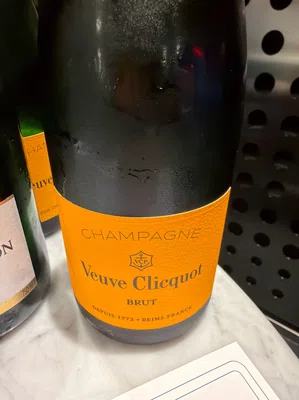
Veuve Clicquot Brut
Veuve Clicquot Ponsardin
Vintage & Drinking Window
🍷
Drinking Window
Drink now. This is released ready to consume and is not built for further cellaring, generally fading and losing tension after 3 to 5 years from purchase.
Perfect time to enjoy!
Vintage Notes
As a Non-Vintage cuvee, this wine deliberately erases the story of a single growing season to establish an unvarying, recognizable house style. The base wine generally reflects the most recent harvest, often showcasing the increasingly warm and ripe conditions of modern Champagne brought on by climate change. Heat spikes and earlier harvests are becoming standard, which suppresses the piercing, laser-like malic acid that once uniformly defined the region. To counter vintage extremes, whether severe spring frost damage or summer drought stress, the winemaking team leans heavily on the vast reserve system. Currently, the market trajectory for this bottling is flat and highly stable in price but carries absolutely zero collectibility; it is definitively a commodity luxury good meant for immediate consumption rather than speculative cellaring or maturation.
AI Confidence: 95%
$55.00 - $75.00 USD
90/100Outstanding
Sophie's Take
Listen to Sophie talk about Veuve Clicquot Brut
0:000:00
Grape Varieties
50% Pinot Noir
30% Chardonnay
20% Meunier
Style: In structural terms, this wine represents a highly calculated exercise in commercial consistency rather than pure energetic expression. Assessing the balance, the wine presents moderate acidity that rests comfortably against a generous nine to ten grams of dosage, an arrangement that achieves a smooth entry but fundamentally lacks the electric, taut interplay of truly profound Champagne. The length is strictly medium, offering a brief persistence of positive, toasty flavors that quickly fades into generalized brioche notes. Intensity shows moderate depth at the palate's center, relying heavily on the high proportion of older reserve wines for structural heft rather than delivering sheer, arrow-like fruit concentration. Complexity offers competent, integrated layers of bruised apple and shortbread, though it misses the kaleidoscopic, articulate integration of top-tier grower wines. Typicity is undeniable as a classic Pinot Noir-led, richer Marne style, yet it deviates entirely from terroir-driven precision to focus on mass approachability. Compared directly to its peers, Veuve Clicquot provides slightly more structural weight than Moet and Chandon Imperial, but falls significantly short of the savory, tightly wound complexity of Bollinger Special Cuvee or the vivid energy and cut of Louis Roederer Collection 244. Within the regional hierarchy, it firmly occupies the commercial middle tier. TRADE-OFF PARAGRAPH: This wine is definitively not for the tension-seeking terroir purist, the linear acid-hound, or the zero-dosage aficionado. Buyers prioritizing absolute energy, mineral focus, and artisanal precision trade all of that away for brand reliability, social cachet, and sheer volume consistency. A similarly priced grower Champagne like Pierre Peters Cuvee de Reserve or a dynamic, rebooted house cuvee like Louis Roederer Collection 244 will serve the focused, acid-driven palate far better for the exact same monetary outlay.
Alcohol: 12%
Tasting Notes
Nose opens with immediate autolytic notes of toasted brioche and hazelnut
The entry brings bruised golden apple and ripe yellow plum
Medium-plus body anchored by baked orchard fruit rather than tense citrus
Notes of ginger biscuit and subtle vanilla spice from older reserve elements
Underlying baked lemon profile rather than zesty precision
Flashes of ripe Meyer lemon offer brief moments of aromatic tension
Professional Ratings
Wine Spectator: 90/100
Robert Parker: 89/100
James Suckling: 92/100
Vinous: 90/100
Decanter: 90/100
Serving Recommendations
Temperature: 8-10 C / 46-50 F
Decanting: Not strictly required, but serving in a wider tulip glass and allowing 10 minutes of air unlocks the autolytic biscuit notes while softening the initial carbonic bite.
Food Pairing:
Classic: Fried chicken
Classic: Truffle potato chips
Classic: Fresh oysters with mignonette
Classic: Gruyere gougeres
Surprising: Aged Comte cheese (works harmoniously with the oxidative reserve notes)
Surprising: Mushroom risotto (matches the earthy autolysis and broader texture)
AVOID: Sweet wedding cake (the sugar clashes violently with the acidity, rendering the wine metallic, bitter, and stripped of fruit)
Winemaking & Vineyard
Production Notes:
The legend of Barbe-Nicole Clicquot Ponsardin remains one of the wine world's most compelling historical arcs. Widowed at twenty-seven in 1805, she faced imminent financial ruin but navigated Napoleonic blockades to smuggle her 1811 vintage into Russia, effectively creating a global luxury empire. Her collaboration with Antoine de Muller to invent the riddling rack in 1816 revolutionized Champagne production, solving the eternal problem of cloudy wine. Yet, this titanic legacy today faces the modern tension between quality and colossal scale. Now operating under the LVMH umbrella, Veuve Clicquot produces an estimated 1.5 million cases annually, a staggering volume that requires drawing fruit from across fifty to sixty different crus. This reliance on vast purchased fruit networks completely erases the romantic notion of site-specific terroir, substituting it with sheer blending logistics and brand chemistry. The winemaking is an industrial triumph: malolactic fermentation is completed fully to soften the acidic edges, and the blend relies heavily on thirty to forty-five percent reserve wines. These reserves are drawn from a massive library stretching back up to fifteen years, aged in stainless steel to prioritize fruit preservation over oak-driven oxidation. The dosage is typically finalized at around nine to ten grams per liter, pushing the upper limit of Brut to ensure broad commercial appeal. This massive volume inevitably creates bottle variation in the market, a reality often contested by critical purists who find modern iterations of Yellow Label occasionally lacking the tightly wound tension and drive of its historical reputation. Honest verdict: A competent, commercially consistent, medium-intensity NV Champagne that trades artisanal tension for global accessibility, landing safely at a 15 on the Robinson scale.
Vineyard Details:
Sourced from a sprawling network encompassing up to sixty different crus across the entire Champagne appellation, including Grand Cru and Premier Cru villages. Because of the massive volume required, soil composition varies wildly from the pure deep chalk of the Cote des Blancs to the heavier clay and limestone mixtures of the Aube and the Marne Valley. The roots, primarily grafted onto standard phylloxera-resistant rootstocks of moderate age, draw from multiple vastly different microclimates, making this wine an expression of a corporate blending recipe rather than a lens for a specific terroir. The sheer logistics of managing this viticultural network requires immense operational precision during harvest, though the overarching goal prioritizes uniform, predictable ripeness over distinctive individual site expression.
Awards & Accolades
• Wine Advocate: 89 Points - A bit disjointed on the finish, lacking the precision and cut expected at this price tier.
• James Suckling: 92 Points - A very reliable and generous NV with plenty of reserve wine character.
• Wine Spectator: 90 Points
• Decanter: 90 Points
• Vinous: 90 Points
Learn More
Explore Sophie's guides about this wine:
Fun Facts (0)
No Fun Facts Yet
Be the first to share something interesting about this wine!
Reviews (0)
No Reviews Yet
Be the first to review this wine!