white
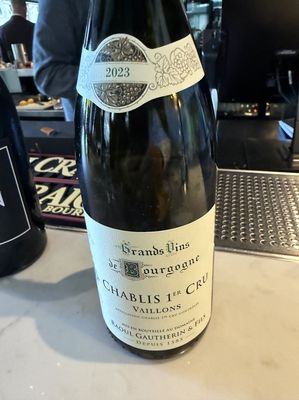
Chablis 1er Cru Vaillons
Raoul Gautherin & Fils
Vintage & Drinking Window
🍷
Drinking Window
2026-2032. Peak through 2030. Right occasion: A focused dinner party with raw seafood. Wrong occasion: A crowded cocktail hour where its subtle precision is lost.
Perfect time to enjoy!
Vintage Notes
The 2023 growing season in Chablis reads as a study in climatic paradox. It was an exceptionally warm, sweltering year that resulted in the largest, most generous harvest by volume in the history of Burgundy. Conventional wisdom suggests such heat would yield flabby, tropical Chardonnays, but 2023 defied expectations. Observers and critics noted that producers who held their nerve and harvested early captured crucial, racy acidity before malic acid levels plummeted. At Gautherin, this translated to a 2023 Vaillons that avoids heat damage and retains startling freshness, anchored by a precisely timed harvest window. However, the vintage does impose limitations: it lacks the austere, towering structural architecture of the superb 2022s and the piercing, dramatic acid profiles of cooler years. Instead, 2023 offers immediate charm, fleshier tree-fruit profiles, and pliant accessibility. Within Gautherin’s historical lineup, the 2023 sits comfortably in the upper-middle of the pack—a highly successful execution of a hot year, yet not a vintage built for 20-year cellaring. This is a vintage for drinking and immediate enjoyment over long-term investment, easily outclassing the tricky, rain-plagued 2021s but ultimately yielding to the magisterial depth of 2022.
AI Confidence: 95%
$45.00 - $75.00 USD
90/100Outstanding
Sophie's Take
Listen to Sophie talk about Chablis 1er Cru Vaillons
0:000:00
Grape Varieties
100% Chardonnay
Style: Examining the 2023 Gautherin Vaillons through the structural BLIC framework reveals a technically adept, focused wine. Balance is tightly calibrated: the energetic, high-toned acidity effortlessly carries the moderate 13.5% ABV and the slightly fleshier mid-palate fruit typical of the 2023 vintage. Length is medium-plus; while the primary lemon and quince fade after a modest interval, a positive, taut saline residue persists for nearly thirty seconds. Intensity is inward-looking rather than explosive—it drives a laser-focused beam of crushed rock and citrus zest straight down the palate. Complexity is moderate but perfectly integrated, displaying perhaps four or five harmonious, interwoven elements rather than a disjointed cacophony of aromas. Regarding typicity, the wine is an unassailable triumph. It rejects the tropical exuberance that plagued many warm-vintage white Burgundies, remaining steadfastly anchored to its cool-climate, oyster-shell origins. In the competitive hierarchy of the appellation, Gautherin’s Vaillons occupies the upper-middle tier of Premier Crus, punching well above entry-level cooperative wines by offering pinpoint articulation. Against William Fèvre’s Vaillons, Gautherin presents a leaner, more austere profile, deliberately eschewing Fèvre’s kiss of old-oak texture. While it cannot rival the profound, meditative depth of Vincent Dauvissat’s iconic Vaillons, it delivers an honest, unvarnished look at the terroir. This wine is distinctly not for drinkers seeking plush, buttery, oak-driven Chardonnay, as they will find its rigid mineral spine and complete lack of wood entirely unforgiving. By purchasing this Vaillons, buyers are trading the broad, creamy texture and immediate weight of New World expressions for austere, nervous energy and strictly linear focus. If you prefer a more generous, rounded white Burgundy at a similar price point, a Pouilly-Fuissé from Domaine Ferret will serve you much better, trading Chablis's sharp cut for the Mâconnais's broader, sunnier disposition.
Alcohol: 13.5%
Tasting Notes
Kumquat and Amalfi lemon zest drive the aromatic entry, firmly anchored by high-wire acidity.
Saline, medium-plus finish that lingers with a positive, mouthwatering pull.
Crushed chalk and oyster shell minerality emerge immediately, confirming classic Chablis typicity.
Tension and precision dominate the mid-palate, delivering electric drive despite moderate density.
White jasmine and chamomile florality lift from the glass after 30 minutes of decanting.
Quince and firm green apple skin frame the lean, taut structural core of the wine.
Professional Ratings
Wine Spectator: 89/100
Robert Parker: 90/100
James Suckling: 91/100
Vinous: 91/100
Decanter: 91/100
Serving Recommendations
Temperature: 10-12°C (50-54°F)
Decanting: 30 minutes in a narrow-based decanter. This brief air exposure blows off the mild struck-match reduction typical of its stainless-steel aging and awakens dormant florality.
Food Pairing:
Classic: Aged Comté cheese, bridging the nutty and chalky Kimmeridgian tones
Surprising: Buttermilk fried chicken, acting as a palate-cleansing squeeze of lemon
Classic: Freshly shucked Kumamoto oysters, highlighting the wine's saline edge
Classic: Roast chicken with tarragon, contrasting the bright citrus cut
Surprising: Japanese vegetable tempura, where the vibrant acid slices through the fry
Classic: Pan-seared Dover sole in brown butter, picking up the subtle lees contact
AVOID: Sweet or fiercely spicy Thai curries, which obliterate the delicate mineral focus
Winemaking & Vineyard
Production Notes:
The Gautherin family’s presence in Chablis is documented back to 1585, but the modern iteration of the estate was forged in the late 1950s by Raoul Gautherin. Today, the 14th-generation father-son team of Alain and Adrien Gautherin commands 16.5 hectares of pristine terroir. Adrien’s defining intervention upon joining the estate was the installation of a state-of-the-art geothermal heating and cooling system in the cellar—an extreme rarity in the rigidly traditional Chablis landscape that drastically slashes their carbon footprint. Despite this modern engineering, the winemaking philosophy remains decidedly hands-off. For the 1er Cru Vaillons, Adrien refuses oak influence and batonnage entirely. The 100% Chardonnay juice ferments spontaneously in stainless steel tanks, where it is held on its fine lees for up to 15 months to slowly build structural tension without masking the terroir. Production volume is kept tight, sitting at roughly 1,500 cases annually, most of which goes straight to the French restaurant trade, making allocations outside of Europe scarce. Critical reception of the 2023 release highlights this tension. Vinous awarded the wine 91 points, anchoring a consensus that praises its linear drive. Yet there is valid disagreement among tasters regarding its depth; while some laud its clear mineral streak, more reserved evaluations caution that the wine is currently easy drinking but nothing complex at this point, revealing the early approachability of the warm vintage. The family's strict stainless-steel regimen intentionally exposes these vintage realities rather than hiding them behind winemaking tricks. Honest verdict: This is a textbook, high-tension Chablis that excels in mineral precision, making it a stellar buy for purists, though it falls short of the profound, multi-layered complexity required for top-tier collectibility.
Vineyard Details:
Vaillons is one of the most significant and renowned Premier Cru hillsides in Chablis, situated on a sprawling, sun-drenched, southwest-facing slope just west of the Serein River. Gautherin does not rely on a single block; rather, their Vaillons is a master blend of fruit sourced from six different parcels, notably including the highly regarded sub-climats of Les Lys, Les Séchers, and Mélinots. The soil here is the holy grail of Chablis: Kimmeridgian marl. Beneath a shallow topsoil, the bedrock is composed of crumbly, highly alkaline limestone interlayered with sticky clay, studded with tiny fossilized Exogyra virgula marine oysters from the Jurassic period. Gautherin’s vines across these plots boast an average age of 43 years, with some older plantings pushing past a half-century. These mature, deep-reaching root systems were the unsung heroes of the 2023 vintage, tapping into subterranean water reserves deep within the limestone fractures to survive the summer heat spikes without shutting down. Furthermore, the natural low vigor of these old vines organically regulated the explosive crop yields that diluted quality at lesser estates in 2023, concentrating the phenolic material in the surviving bunches.
Awards & Accolades
• 91 points - Vinous (Neal Martin, Chablis Report)
• 94 points - Vert de Vin
Learn More
Explore Sophie's guides about this wine:
Fun Facts (1)
Sophie
Vaillons sits on the famous north-facing slope that catches the morning sun but stays cool—precisely why it produces that addictive saline minerality you're getting. The oyster shells in the soil aren't just poetic, they're literally fossilised remnants that influence the wine's briny character.
Reviews (0)
No Reviews Yet
Be the first to review this wine!