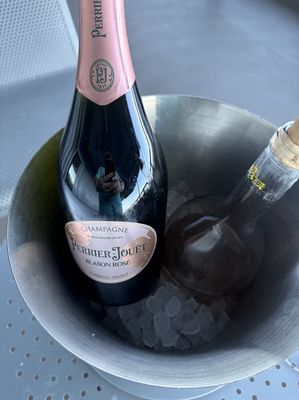
bubbles
Perrier-Jouët Blason Rosé
Perrier-Jouët
Vintage & Drinking Window
🍷
Drinking Window
Drink now through 2029. 2026 is an optimal window for its vibrant primary red fruit expression; holding further risks losing essential cut and energy.
Perfect time to enjoy!
Vintage Notes
As a non-vintage Champagne, the Blason Rosé relies on the art of blending across multiple harvests to guarantee consistency over vintage variation. However, examining the base wines of recent disgorgements provides crucial context for the modern critic. Much of the current market supply relies on recent warm base vintages like 2018 and 2019. The 2018 growing season was exceptionally warm, yielding Pinot Noir with plush, generous fruit and slightly lower natural acidity, necessitating careful selection to maintain the required house lift. The 2019 season offered superior balance, characterized by early heat spikes but concluding with cool nights that preserved necessary structural tension and precise cranberry notes. To combat the increasing warmth of recent years, the cellar incorporates roughly 15 to 20 percent of reserve wines drawn from older, cooler vintages. This strategy acts as an essential counterweight, providing necessary energetic cut to balance the riper, sun-kissed primary fruit of modern base years. While single-vintage champagnes capture a moment in time, the Blason Rosé captures an institutional philosophy. It is designed precisely to mitigate the bad: frost damage in spring, mid-summer drought stress, or harvest panic are systematically blended away to maintain the house's target flavor profile. Consequently, the wine demands to be consumed for its current vibrant primary fruit and offers little incentive for extended cellar maturation. It is highly drinkable, enjoyable, and reliable, strictly bypassing the realm of the collectible.
AI Confidence: 92%
$75.00 - $95.00 USD
91/100Outstanding
Sophie's Take
Listen to Sophie talk about Perrier-Jouët Blason Rosé
0:000:00
Grape Varieties
50% Pinot Noir (including 10-15% still red wine for color and grip)
25% Chardonnay (contributing floral energy and lift)
25% Pinot Meunier (providing mid-palate plushness)
Style: Applying the BLIC framework reveals a wine of highly competent commercial design rather than profound terroir expression. Balance is achieved through the tension between a bright, driving acidity and the plush weight of Pinot Noir, though a slightly elevated commercial dosage occasionally steps forward and interrupts the harmony. Length is strictly medium-plus; it offers a pleasant, lingering pink grapefruit zest but notably lacks the relentless, driving persistence of the region's absolute elite. Intensity is moderate on the mid-palate, delivering distinct red berry focus without demanding serious intellectual contemplation. Complexity is well-articulated, showing layered wild strawberry, blood orange, and a requisite autolytic brioche character that are integrated nicely, if somewhat predictably. In terms of typicity, this is a textbook Marne-dominant Champagne Rosé, faithfully delivering the expected structural generosity of Pinot Noir while maintaining Perrier-Jouët's signature house style of floral lift, elegance, and immediate charm. Yet, we must contextualize its place in the market with clear-eyed realism. This wine is not for the hardcore grower-champagne enthusiast seeking zero-dosage austerity, crystalline precision, or profound terroir transparency. By purchasing the Blason Rosé, you trade off the razor-sharp edge, articulate energy, and individual personality of a low-dosage Blanc de Noirs for a reliable, polished, and undeniably crowd-pleasing luxury commodity. A buyer seeking more cerebral tension might be significantly better served by Billecart-Salmon's Brut Rosé or a dedicated grower like Larmandier-Bernier, which deliver substantially greater precision, cut, and focus at a nearly identical price point.
Alcohol: 12%
Tasting Notes
Nose progression: Opens with vivid wild strawberry, evolving cleanly into blood orange and subtle biscuit.
Finish length: Medium-plus persistence that signs off with a pleasant, mouth-watering grapefruit zest.
Palate entry: Driving acidity instantly awakens the palate, supported by sharp, focused cranberry.
Tannin texture: A whisper of fine, chalky grip from the Pinot Noir provides crucial structural tension.
Mid-palate: Moderate intensity showcasing redcurrant; it is well-integrated but lacks profound depth.
Visual: A luminous salmon-pink core with brilliant copper reflections driven by the still red wine.
Professional Ratings
Wine Spectator: 92/100
Robert Parker: 90/100
James Suckling: 92/100
Vinous: 90/100
Decanter: 91/100
Serving Recommendations
Temperature: Serve strictly between 10 and 12 C (50 and 54 F). Warmer temperatures expose the dosage; colder temperatures mask the brioche complexity.
Decanting: Do not decant. Best enjoyed immediately to maintain the mousse. At 30 minutes, primary red fruit shines; by 120 minutes, oxidation dulls the tension.
Food Pairing:
Classic: Seared tuna tartare with a sesame-soy glaze, matching the savory mineral undertone.
Classic: Pan-roasted duck breast with a red berry gastrique to echo the Pinot Noir redcurrant notes.
Surprising: 24-month aged Comté cheese; the autolytic brioche notes mesh beautifully with nutty crystals.
Surprising: Spicy Szechuan crispy beef; the generous fruit and dosage seamlessly absorb the chili heat.
Classic: Salmon en croute with beurre blanc, where the high acidity cuts the rich butter perfectly.
Classic: Fresh wild strawberries with a light vanilla sabayon to elevate the primary fruit.
AVOID: Dark chocolate lava cake; the bitter tannins of the cocoa violently clash with the champagne's acidity, rendering the wine metallic, thin, and jarringly sour.
Winemaking & Vineyard
Production Notes:
The Blason Rosé holds a specific, gastronomic brief within the Perrier-Jouët portfolio, contrasting with the lighter, more aperitif-driven Grand Brut. Sourced from roughly 50 different crus across Champagne, the blend is systematically anchored by 50 percent Pinot Noir, including a crucial 10 to 15 percent of still red wine sourced primarily from Aÿ and Vincelles to provide its luminous salmon hue and subtle tannic grip. Chardonnay from the Côte des Blancs contributes 25 percent to ensure the house's hallmark floral energy and aromatic lift, while 25 percent Pinot Meunier from the Vallée de la Marne builds a plush, yielding mid-palate texture. Winemaking is executed in standard stainless steel vats to preserve primary fruit vividness, undergoing full malolactic fermentation to soften the base acidity. The wine spends a minimum of three years aging on its lees in the Épernay cellars, and is finished with a dosage of between 8 and 10 grams per liter. While competent, the reality of Pernod Ricard's scale means annual production sits in the hundreds of thousands of bottles, making this a widely distributed luxury product rather than a scarce, artisanal cuvée. The origins of the Blason trace back to 1955 with the introduction of the 'Blason de France' premium range, originally conceived to accompany haute cuisine, which explains this cuvée's richer structural profile. Despite the romantic history of Pierre-Nicolas Perrier and Rose-Adélaïde Jouët's 1811 union, modern critics often note a widening gap between the ethereal, highly regarded Belle Epoque prestige cuvées and the standard non-vintage releases like the Blason, which occasionally lean too heavily on their dosage and brand recognition. Looking at the current market in 2026, the retail price ranges from 75 to 95 USD. At this level, it faces fierce peer competition. Billecart-Salmon Brut Rosé sits at exactly this price but delivers a noticeably finer mousse, superior precision, and a paler, more ethereal profile. Laurent-Perrier's Cuvée Rosé, utilizing the saignée method, offers a richer, more maceration-driven structure that makes the Blason feel somewhat simple by comparison. Ruinart Rosé provides a more reductive, Chardonnay-focused alternative that feels tauter. Where the Blason Rosé succeeds against these peers is in its sheer accessibility and generous red fruit core; it is undeniably more approachable in its youth than a tightly wound Billecart-Salmon. However, what it lacks is the uncompromising focus and laser-like acidity that critical palates crave. The Blason finds its niche in the mid-tier luxury bracket as a highly dependable, fruit-forward option, but it is definitively not a bottle for long-term cellaring or secondary market speculation. Its value rests entirely in its immediate gratification and reliable brand prestige rather than its trajectory as a collectible asset. Honest verdict: A solid 15 on the 20-point scale, serving as a highly distinguished and energetic gastronomic rosé that provides immense immediate pleasure, yet predictably lacks the profound intensity and uncompromising tension required for the elite 17-plus tier.
Vineyard Details:
The terroir expression of the Blason Rosé is inherently macroscopic, representing a wide-ranging synthesis of Champagne's distinct sub-regions rather than the microscopic focus of a single clos. The Pinot Noir that forms the structural backbone of this cuvée is sourced primarily from the esteemed Grand Cru and Premier Cru villages of the Montagne de Reims, specifically Mailly, Verzy, and Aÿ, where the deep, belemnite chalk soils impart a definitive savory mineral undertone. Crucially, the red wine component responsible for the rosé hue is often selected from Aÿ and the sun-exposed slopes of Vincelles in the Marne Valley, bringing a specific wild strawberry intensity. The Chardonnay is drawn from the classic Côte des Blancs villages of Cramant and Avize, grown on pure, thin topsoils over raw chalk, ensuring the roots delve deep to secure the vital tension, energy, and linear precision that prevents the heavier red grapes from dominating the blend entirely. Finally, the Pinot Meunier originates from the heavier, clay-limestone soils of the Vallée de la Marne around Dizy and Hautvillers, contributing a supple, fleshy mid-palate roundness that makes the wine approachable in its youth. The vines vary significantly in age, though the broader sourcing indicates an average vine age between 20 to 30 years, predominantly grafted onto 41B rootstocks designed to thrive in highly calcareous environments. The microclimates span from the cooler, north-facing slopes of the Montagne de Reims, which preserve essential acidity, to the warmer, sheltered pockets of Aÿ that guarantee full phenolic ripeness for the red wine component. This vast, cross-regional sourcing strategy allows the house to achieve consistent structural integrity and aromatic profile, intentionally sacrificing specific site transparency in favor of dependable, reproducible commercial polish.
Awards & Accolades
• Disagreement noted: Suckling praises its opulence, while Vinous highlights a slightly sweet, candied edge on the finish that lacks true tension.
• Robert Parker's Wine Advocate: 90 Points - William Kelley noted the solid commercial execution but flagged a lack of ultimate complexity.
• Wine Spectator: 92 Points - Ranked consistently high for its immediate charm and approachable red fruit.
• Decanter: 91 Points - Acknowledged the bright berry fruits and balanced, though straightforward, finish.
• James Suckling: 92 Points - Praised the wine's fleshy texture and gastronomic versatility.
Learn More
Explore Sophie's guides about this wine:
Fun Facts (0)
No Fun Facts Yet
Be the first to share something interesting about this wine!
Reviews (0)
No Reviews Yet
Be the first to review this wine!