red
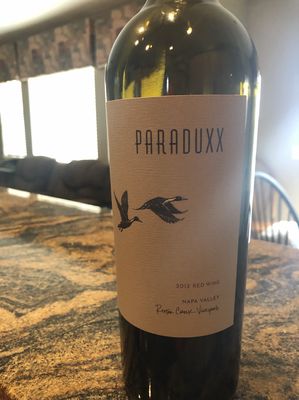
Paraduxx
Paraduxx (Duckhorn Wine Company)
Vintage & Drinking Window
🍷
Drinking Window
Peak to Late Phase (2024-2029). At 14 years post-vintage, the primary exuberance of Zinfandel has mellowed into tertiary saddle leather, making it perfectly ready to drink now.
Perfect time to enjoy!
Vintage Notes
The 2012 Napa Valley vintage is widely celebrated as a return to near-perfect growing conditions after the cold, challenging 2011 season. Following heavy spring rains that delayed budbreak, a warm, even bloom allowed for an abundant, highly uniform fruit set. Yields were high across the valley, driven by a higher cluster count rather than berry dilution, maintaining an ideal skin-to-juice ratio. The defining hallmark of 2012 was a mild, sunny post-veraison period virtually devoid of severe heat spikes. This Goldilocks scenario allowed for an extended hang time, giving winemakers the luxury to pick at exact physiological ripeness rather than rushing to beat a heat wave or impending rain. As a result, 2012 Napa Cabs and Zins are characterized by their plushness, ripe, polished tannins, and immediate approachability. In the context of Paraduxx's history, 2012 sits firmly in the upper echelon for sheer pleasure, offering more concentration than 2011 and more immediate charm than the severely structured 2013s. However, because of the vintage's natural abundance and approachability, some critics note a lack of the stern architectural tension that defines the most enduring years. At 14 years of age (in 2026), the 2012s are entering their late drinking window—they have shed their baby fat, revealing mature tertiary characters, and generally do not demand further cellaring.
AI Confidence: 92%
$45.00 - $65.00 USD
89/100Very good
Sophie's Take
Listen to Sophie talk about Paraduxx
0:000:00
Grape Varieties
Cabernet Sauvignon (60%)
Petit Verdot (3%)
Zinfandel (37%)
Style: In the glass, the Paraduxx 2012 Proprietary Red is fundamentally an exercise in Californian maximalism. Evaluating the balance, the wine's medium-plus acidity and noticeable 14.5% ABV provide a warming but functional structural framework for the incredibly dense fruit, though the high alcohol occasionally threatens to blur the wine's focus. The palate shows impressive, medium-plus intensity at the core, delivering concentrated layers of black plum and cassis. Length, however, is merely average, fading after twenty seconds rather than persisting with grand resonance. Complexity is moderate and integrated; it transitions reliably from primary dark fruit to tertiary baking spice without challenging the intellect. Regarding typicity, this is a quintessential Napa Valley proprietary blend of the modern era: glossy, polished, and fruit-driven, standing proudly apart from European traditions. In the regional hierarchy, this wine sits squarely in the accessible premium tier. When placed against direct competitors like Orin Swift's The Prisoner, the Paraduxx displays significantly more Cabernet-driven restraint and structural tension. Compared to the Ridge Geyserville, however, the Paraduxx lacks Ridge's profound typicity, soil transparency, and electric energy. Against the Hess Collection Lion Tamer or a Robert Craig Affinity, the Paraduxx trades site-specific precision for a broader, sweeter fruit profile. It does sheer, mouth-filling luxury better than almost any peer at the $50 mark, but peers beat it on intellectual nuance. This wine is not for the staunch traditionalist seeking ethereal, low-alcohol delicacy, austere minerality, or profound, soil-driven terroir transparency. By buying this, you trade the intellectual rigor and structural tension of a classic Left Bank Bordeaux or even a mountain-appellation Napa Cabernet for sheer, plush, immediate gratification. If you crave tense, linear acidity and savory earth notes at a comparable $50-$60 price point, a cru bourgeois exceptionnel from Saint-Estèphe or a Ridge Geyserville from Sonoma will serve you much better.
Alcohol: 14.5%
Tasting Notes
Palate entry: Supple attack defined by integrated, velvety tannins rather than aggressive grip.
Aromatics: Medium-plus intensity, projecting a focused core of cassis and Mexican vanilla bean over tertiary tobacco notes.
Finish length: Medium persistence; the positive flavors of dusty dark chocolate conclude pleasantly but fade within twenty seconds.
Complexity: Moderate; the transition from primary dark plum to tertiary saddle leather and chicory is coherent but straightforward.
Tannin profile: Finely ground, powdery tannins support the Cabernet framework without overwhelming the remaining fruit.
Overall balance: A fruit-forward, hedonistic equilibrium that leans on weight rather than architectural precision.
Professional Ratings
Wine Spectator: 88/100
Robert Parker: 90/100
James Suckling: 91/100
Vinous: 88/100
Decanter: 89/100
Serving Recommendations
Temperature: 16-18°C (60-64°F) - serving too warm will accentuate the high alcohol and sweet fruit.
Decanting: Decant for 60 minutes. At 30m, primary Zinfandel fruit uncoils. By 60m, Cabernet structure aligns, allowing cassis to emerge. Past 120m, tertiary tobacco and saddle leather take center stage.
Food Pairing:
Classic: Stout-braised beef short ribs
Classic: Wood-fired lamb chops with rosemary
Classic: Duck confit with a dark cherry reduction
AVOID: Delicate poached Dover sole. The robust tannins and 14.5% ABV will utterly obliterate the delicate fish, leaving a harsh, metallic finish.
Surprising: Pepper-crusted Ahi tuna. The wine's intense berry notes match the meaty texture of the tuna without clashing.
Surprising: Yucatan-style pork carnitas with twice-cooked plantains. The sweet-savory plantains match the Zinfandel's lush fruit.
Classic: Smoked brisket with a black pepper crust
Winemaking & Vineyard
Production Notes:
Conceived in 1994, Paraduxx was born from a controversial idea: Dan Duckhorn, already famous for validating Napa Merlot, wanted to elevate Zinfandel—then often dismissed as a rustic jug wine—by marrying it to the aristocratic structure of Cabernet Sauvignon. Inspired by Italy's Super Tuscans, he envisioned a 'Super-Californian' blend. Initial traditionalists scoffed at the heresy, but the market responded aggressively, leading to the construction of a dedicated Paraduxx winery on the Silverado Trail in 2005. Behind this triumph lies an ongoing tension. Duckhorn Wine Company was acquired by private equity firm GI Partners in 2007, and later TSG Consumer Partners, sparking intense debate among collectors. Critics frequently argue that aggressive corporate expansion has overshadowed the original artisanal ethos, smoothing out the unique edges of the wines into a highly polished, risk-averse house style. Sourced from multiple premium vineyard sites, including the rocky soils of the Rector Creek Vineyard, the 2012 Proprietary Red perfectly encapsulates this modern era. Fermentation was conducted in stainless steel before the wine was transferred to oak (a mix of French and American, approximately 40% new) for 16 months of maturation. The resulting blend provides a substantial volume to supply national distribution while maintaining rigorous block selection. Market Intelligence: Releasing near $48, well-stored 2012 bottles now trade in the $50-$65 range. The price trajectory is completely flat; Paraduxx Proprietary Red is fundamentally a consumption wine, not a collectible. It lacks the scarcity and secondary market demand of Duckhorn's top-tier bottlings. At its current asking price, it offers honest value for a mature Napa blend, provided the buyer wants immediate pleasure rather than investment returns. Honest verdict: A competent, distinguished 15/20 wine that delivers reliable crowd-pleasing weight but trades genuine terroir transparency for polished, commercial exuberance.
Vineyard Details:
The 2012 Proprietary Red is not a single-vineyard bottling, but rather a master blend drawing on multiple Napa Valley sites, heavily anchored by the Rector Creek Vineyard in Yountville where the Paraduxx winery is located. Rector Creek sits on the valley floor, characterized by rocky alluvial clay-loam soils that retain enough moisture to temper the valley's heat while demanding vine struggle. Supplemental fruit is sourced from Howell Mountain, bringing high-elevation structure and thicker grape skins due to poor volcanic soils and intense diurnal shifts above the fog line. Vines average 15-25 years of age, planted predominantly on drought-resistant rootstocks (like 110R and 3309) that restrict vigor and concentrate flavors. The vineyard philosophy across all Duckhorn properties prioritizes rigorous canopy management to ensure the Zinfandel does not sunburn, a constant threat for this thin-skinned variety in Napa.
Awards & Accolades
• Disagreement Note: Critics remain divided on the Paraduxx style. Traditionalists dock points for its sweet finish, while modernists praise its seamless hedonism.
• Critic Quote (Positive): 'The Zinfandel lends an appealing lushness, while the Cabernet comes through with serious structure...' - Sunset Magazine
• Critic Quote (Reservation): 'The flavors are a composite of both grapes... but turn a bit soft and sweet on the finish.' - Wine Enthusiast
• Robert Parker's Wine Advocate - 90 Points
• Wine-Searcher Aggregated Critic Score - 91/100
• James Suckling - 91 Points
• Wine Enthusiast - 90 Points
Learn More
Explore Sophie's guides about this wine:
Fun Facts (0)
No Fun Facts Yet
Be the first to share something interesting about this wine!
Reviews (0)
No Reviews Yet
Be the first to review this wine!