bubbles
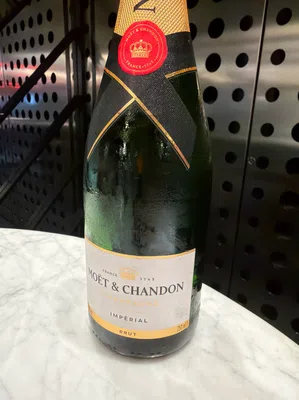
Moët & Chandon Impérial
Moët & Chandon
Vintage & Drinking Window
📅
Drinking Window
Drink immediately upon purchase. Right occasions: casual toasts and large parties where brand recognition matters. Wrong occasions: analytical tasting groups where its short finish will be exposed.
Vintage Notes
Because this is a Non-Vintage cuvée, there is no single growing season narrative. Instead, the vintage story here is one of an eternal battle against the region's inherently marginal, chaotic climate. The appellation is plagued by spring frosts, devastating summer hail, and late-season harvest rot. To neutralize these threats and protect the brand's exact flavor profile year over year, the chef de cave relies on a massive palette of over 100 distinct base wines. The blend incorporates between 20 percent and 30 percent reserve wines from previous, riper years. This solera-adjacent buffering ensures that whether the base year was a scorched, heat-spike vintage like 2018 or a damp, rot-threatened year like 2017, the final product remains fundamentally identical. The legend of this house is built on exactly this scale and reliability. Founded in 1743 by Claude, the operation ascended to international dominance under Jean-Rémy. His friendship with Napoleon Bonaparte, who routinely visited the estate and is historically linked to the tradition of sabering, inspired the imperial designation bestowed in 1869. The brand's formidable marketing apparatus made it the staple of European royalty, and today it remains deeply embedded in global pop culture. Yet, this cultural ubiquity creates its own set of controversies. Operating as the financial engine of a luxury conglomerate, the house represents everything the modern grower movement rebels against: the prioritization of marketing over terroir, the massive homogenization of vineyards, and the industrial scale of production. Its fame even makes it a target; in 2016, Italian authorities busted a massive counterfeit ring holding 9,000 fake bottles. As for maturity, this cuvée is designed strictly for early consumption. It is entirely non-collectible. The wine is released exactly when it is meant to be drunk, usually peaking within its first year on the shelf and rarely benefiting from further cellaring. After two years in a domestic rack, the primary fruit fades without the necessary structural concentration to evolve into tertiary complexity.
AI Confidence: 92%
$45.00 - $60.00 USD
91/100Outstanding
Sophie's Take
Listen to Sophie talk about Moët & Chandon Impérial
0:000:00
Grape Varieties
35% Pinot Meunier
35% Pinot Noir
30% Chardonnay
Style: Evaluating this wine structurally reveals a cuvée built strictly for approachability over profundity. Balance is its chief virtue: the medium-plus acidity is neatly counterweighted by a standard Brut dosage of roughly 7 g/L, rounding off any jagged edges to deliver a frictionless mouthfeel at 12.0% ABV. Yet, when evaluating Length, the facade slips; the finish is strictly medium-minus, fading rapidly into a simple, candied lemon drop whisper. Intensity is distinctly moderate, focusing entirely on the mid-palate with bright, upfront orchard fruit energy rather than deep concentration. Complexity is equally managed; it offers a predictable but pleasant three-chord progression of green apple, white florals, and a fleeting hint of biscuit, though these elements sit side-by-side rather than integrating into a resonant whole. In terms of typicity, it represents the absolute baseline for the Non-Vintage category, essentially engineering the global expectation of a standard regional blend. The critical consensus reflects this engineered competence, with the wine consistently attracting high-80s to low-90s scores. Wine Spectator awards it 92 points, noting its fine and creamy texture and lively, orange peel acidity. James Suckling and Decanter sit at 91, praising the soft, straightforward fruit. Conversely, Robert Parker's Wine Advocate regularly pegs it at 89, viewing it as pleasant but decidedly unexceptional. The disagreement is informative: critics rewarding consistency and clean winemaking push it into the 90s, while those demanding depth keep it in the 80s. As one prominent critic noted with reservation, it is an absolute benchmark for accessibility and celebration, but often entirely devoid of the tension and mystery that makes this region profound. In the peer landscape, it sits alongside Veuve Clicquot Yellow Label, Mumm Cordon Rouge, and Piper-Heidsieck. It does approachability and lightness better than the heavier, sometimes clumsier Veuve Clicquot. However, compared to Charles Heidsieck Brut Réserve or Louis Roederer Collection 244, it completely lacks reserve-wine depth and textural layering. It dominates the entry-tier regional hierarchy through sheer availability, not qualitative supremacy. Who is this wine NOT for? It is absolutely not for the terroir-obsessed drinker seeking tension, site-specific cut, or prolonged lees evolution. By purchasing this bottle, a buyer trades the intellectual engagement and artisanal precision of grower sparkling wine for the safety of a globally recognizable label. At the current retail asking price, a discerning buyer might be far better served by the tightly wound mineral focus of Pierre Moncuit Blanc de Blancs or the rich, complex architecture of a similarly priced Bollinger Special Cuvée, both of which deliver genuine complexity where this wine delivers only competent reassurance.
Alcohol: 12%
Tasting Notes
Lively mousse upon entry, establishing a creamy texture that expands across the front palate.
The finish is cleanly articulated but noticeably brief, resolving into simple white grapefruit within ten seconds.
Initial aromatics lean heavily on primary orchard fruit, showing crisp green apple tightly bound to a core of medium-plus acidity.
Structural acidity provides immediate cut and lift, driving an energetic but linear palate profile.
Tension softens quickly into a rounder, dosage-assisted mouthfeel, masking the wine's raw acidic nerve.
The mid-palate introduces flashes of white peach, though the fruit concentration remains strictly moderate.
Professional Ratings
Wine Spectator: 92/100
Robert Parker: 89/100
James Suckling: 91/100
Vinous: 90/100
Decanter: 91/100
Serving Recommendations
Temperature: 8-10 C (46-50 F)
Decanting: Do not decant. Immediate pouring preserves the delicate bead. Exposing this wine to air quickly flattens its modest structural intensity and dissipates its upfront primary fruit energy.
Food Pairing:
Fried chicken (Classic - carbonation scrubs the greasy batter)
Truffle-salted popcorn (Surprising - elevates the toasted elements of the wine without demanding intense concentration)
Oysters on the half shell (Classic - acidity cuts the brine)
Gruyere gougeres (Classic - cheese fat mirrors the subtle autolytic pastry notes)
Caviar with blinis (Classic - traditional luxury textural pairing)
Classic potato chips (Surprising - the salt and oil are perfectly countered by the wine's crisp attack)
AVOID: Sweet wedding cake (Sugar clash strips the wine of its fruit, making the remaining acidity taste intensely metallic and bitter)
Winemaking & Vineyard
Production Notes:
The sheer scale of production here demands an industrial, highly sanitized approach to winemaking. Once the grapes arrive at the crush pads, they are pressed and fermented entirely in massive, temperature-controlled stainless steel vats. There is absolutely no oak involvement; zero percent of the wine sees barrels, precluding any oxidative complexity or toastiness from the vessel. Full malolactic fermentation is standard practice, deployed to artificially soften the aggressive malic acid of the northern climate into rounder, creamier lactic acid. Following the assemblage of the 100-plus base and reserve wines, the cuvée undergoes its secondary fermentation in the bottle and rests on its lees for roughly 24 months. This duration just clears the legal minimum for Non-Vintage Champagne of 15 months but falls far short of the 36 to 48 months typically required to generate profound autolytic character. Upon disgorgement, the dosage is added. While historically resting around 9 g/L, recent iterations have dropped closer to 7 g/L, maintaining a classic Brut profile that masks minor astringencies without tasting overtly sweet. From a market intelligence standpoint, this wine retails reliably in the 45 to 60 USD range across almost every global market. It is decidedly not a collectible asset. The price trajectory is incredibly stable, pegged strictly to inflation and corporate pricing strategy rather than vintage scarcity or secondary market demand. Allocation status is non-existent; this is a high-volume, readily available commodity. Honest verdict: A perfectly competent but deeply uninspiring commercial sparkling wine that sits firmly at 14.5 on the Robinson scale, delivering reliable brand security over actual vinous thrill.
Vineyard Details:
To speak of terroir in the context of this wine is to speak in broad, regional generalizations. The fruit is sourced from an astonishing 800 different vineyard parcels spread across 230 of the region's 319 recognized villages. While this includes prestigious Grand Cru and Premier Cru sites, the massive blending process actively mutes any site-specific voice. The overarching soil composition is characterized by belemnite and micraster chalk, which are porous, ancient marine subsoils that provide exceptional drainage and impart the classic saline cut found in smaller cuvées. Rootstocks vary wildly across the hundreds of contracted growers, heavily dependent on localized replanting schedules, though primarily focusing on phylloxera-resistant 41B and SO4. Vine ages similarly span the entire spectrum from newly planted replacements to 40-year-old vines. However, because the house purchases massive tonnages of grapes from independent growers to supplement its own 1,190 hectares of estate vineyards, it is impossible to attribute the wine's character to specific farming practices, vine age, or microclimate. The microclimate is essentially the macroclimate of the entire appellation: cold, damp, and highly variable. The winemaking team is not attempting to express a vineyard; they are attempting to express a corporate recipe, making the actual agricultural inputs secondary to the blenders' technical art.
Awards & Accolades
• Decanter World Wine Awards - Bronze Medal (2016)
• Ranked #1 Most Valuable Wine Brand globally by Brand Finance
• Official Champagne of the Golden Globes (over 25 years)
• Royal Warrant Holder for Queen Elizabeth II
Learn More
Explore Sophie's guides about this wine:
Fun Facts (0)
No Fun Facts Yet
Be the first to share something interesting about this wine!
Reviews (0)
No Reviews Yet
Be the first to review this wine!