bubbles
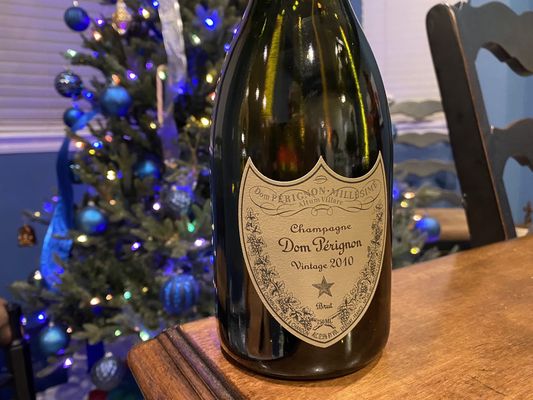
Dom Pérignon
Moët & Chandon
Vintage & Drinking Window
🍷
Drinking Window
2022 to 2035. Early maturity phase now. Drink over the next decade rather than holding for extended aging.
Perfect time to enjoy!
Vintage Notes
The 2010 growing season was a brutal trial by water. A bitter winter and dry spring gave a false sense of security. August brought a catastrophe: two months of rain fell in a mere two days. Mid-September heat then triggered rampant botrytis cinerea, which aggressively attacked the thin-skinned Pinot Noir. It is widely considered a lesser, highly problematic vintage in Champagne, ranking in the lower-middle tier of Dom Perignon releases over the last two decades. Many prestige houses, including Louis Roederer for Cristal, completely refused to declare a vintage. The fact that this wine exists is a testament to rigorous sorting and deep corporate pockets. It leans unusually heavily on Chardonnay to compensate for the compromised black grapes. It stands as a triumph of methodology over meteorology, though its structural profile remains stubbornly primary and phenolic, suggesting a wine to drink in the medium-term rather than a candidate for the deepest cellars.
AI Confidence: 95%
$220.00 - $280.00 USD
95/100Classic, a great wine
Sophie's Take
Listen to Sophie talk about Dom Pérignon
0:000:00
Grape Varieties
54% Chardonnay (provides structure, tropical fruit, and resilience in a difficult year)
46% Pinot Noir (heavily culled due to botrytis, yielding a lower percentage than usual)
Style: BLIC Assessment: Balance leans heavily on sharp, linear acidity (high) intersecting with a medium-bodied, slightly phenolic mid-palate; alcohol is integrated at 12.5 percent. Length is only medium, notably lacking the reverberating echo of superior years, finishing with a sudden snap of citrus peel rather than expanding minerality. Intensity is moderate, relying on an aggressive reductive matchstick note to announce itself before fading into restrained tropical and autolytic tones. Complexity is moderate to high, though the integration feels slightly forced, with the rich tropical Chardonnay notes wrestling against a leaner, stricter acidic framework. Typicity: Atypical for the house. The unusually high percentage of Chardonnay (54 percent) strips the wine of its usual Pinot Noir-driven red fruit shoulders, replacing it with an almost Blanc de Blancs-like linearity infused with bruised fruit characters. PEER COMPARISON: Direct competitors include Krug Grande Cuvee, Taittinger Comtes de Champagne, and Roederer Cristal. Dom Perignon 2010 offers more immediate smoky reduction than Comtes, but Comtes provides vastly superior precision. Since Cristal did not declare a 2010, this wine stands alone in its specific bracket, but compared to a 2012 Cristal, the 2010 shows far less concentration and a distinctly shorter persistence. In the regional hierarchy, it remains top-tier in branding but sits firmly in the middle-tier in objective performance for this specific decade. TRADE-OFF PARAGRAPH: This wine is not for the traditionalist seeking the plush, expansive, fruit-driven generosity of a sunny vintage like 2009. Buyers seeking investment-grade Champagne for a forty-year slumber are trading off structural integrity, as this vintage's slight phenolic edge and faster development curve suggest a shorter lifespan. For the same price point, consumers seeking immediate opulence and classical balance would be far better served purchasing Krug Grande Cuvee or searching for back-vintages of the profoundly superior 2008.
Alcohol: 12.5%
Production: 5,000,000 cases
Tasting Notes
Aromas of struck match, green mango, and white pepper, showing moderate complexity.
Palate entry is taut with crisp green apple, yielding to orange peel and bruised pineapple.
Medium-plus acidity providing initial lift, followed by a surprisingly weighty mid-palate.
Medium length finish, fading faster than legendary vintages, marking its primary limitation.
Phenolic texture on the finish, a slightly abrasive grip masking the underlying chalkiness.
Professional Ratings
Wine Spectator: 96/100
Robert Parker: 93/100
James Suckling: 98/100
Vinous: 94/100
Decanter: 95/100
Serving Recommendations
Temperature: 10 to 12 degrees Celsius (50 to 54 degrees Fahrenheit)
Decanting: Open 30 minutes before serving. Initially reductive with struck match aromas. At 30 minutes, ginger and tropical tones emerge. Avoid aggressive decanting in a carafe to preserve the delicate effervescence.
Food Pairing:
Surprising: Fried chicken with spicy mayo (crisp effervescence scrubs the palate, acid slices the fat).
Classic: Oysters on the half shell with a subtle mignonette (acidity cuts the richness).
Classic: Sea urchin uni nigiri (iodine matches the saline oyster-shell minerality).
Surprising: Aged gouda (amino acid crystals align with the umami autolytic notes).
Classic: Dover sole meuniere (brown butter complements the lees aging).
Classic: Jamon Iberico (salt and fat tame the structural acidity).
AVOID: Sweet milk chocolate or vanilla cake. The sugar completely hollows out the wine, amplifying bitter and acidic tones.
Winemaking & Vineyard
Production Notes:
MARKET INTELLIGENCE: Current retail pricing sits broadly between 220 and 280 USD. Collectibility is inherently limited. Unlike the immortal 2008, 2010 is not an investment-grade vintage meant for a forty-year sleep. The price trajectory is stable rather than appreciating, with wide allocation due to substantial production volumes. THE LEGEND: Dom Perignon was founded on a vision of harmonious blending across the Champagne region. The 2010 vintage introduces serious drama to that marketing narrative. It was the year botrytis ravaged the Pinot Noir. While prestige competitors like Cristal walked away entirely, refusing to declare a vintage, Chef de Cave Richard Geoffroy and Vincent Chaperon attempted a high-wire rescue mission. The legend of 2010 is one of extreme triage, discarding twenty percent of the Pinot Noir crop and rewriting the blend to rely heavily on Chardonnay. The imperfection is written into the wine itself: a prestige cuvee born from necessity and salvage rather than ideal conditions. TERROIR AND CRAFT: Sourced from the expansive tapestry of Champagne grand crus including Ay, Bouzy, Verzenay, Mailly, and Cramant, plus the premier cru of Hautvillers. Winemaking utilizes stainless steel primary fermentation with complete malolactic conversion. No oak is used. After approximately eight years on the lees, the wine was disgorged with a traditional Extra Brut dosage around 5 grams per liter. Honest verdict: A competent, average-plus 16-point wine on the Robinson scale that demonstrates remarkable cellar triage, but at this premium price tier, it ultimately lacks the profound energy, precision, and length expected of a legendary prestige cuvee.
Vineyard Details:
The expansive sourcing for Dom Perignon encompasses the finest grand crus of Champagne alongside the historic premier cru of Hautvillers. Soils are classic Kimmeridgian and Campanian chalk, providing critical drainage during the deluges of August 2010. Vine ages average 35 to 40 years on predominantly 41B rootstock. The microclimates of the Cote des Blancs preserved the Chardonnay, while the Montagne de Reims and Vallee de la Marne vineyards suffered intense botrytis pressure, necessitating unprecedented levels of cluster sorting directly in the vineyard.
Awards & Accolades
• Antonio Galloni quote: The 2010 is an intriguing wine, but it ultimately falls short of the profound 2008, finishing with a slightly awkward phenolic edge.
• James Suckling quote: A dense and powerful Champagne highlighting the impressive maturity of the Chardonnay.
• Ranked #4 in James Suckling Top 100 Wines of France 2020
Learn More
Explore Sophie's guides about this wine:
Fun Facts (1)

Sophie
The 2010 vintage is a bit of a Goldilocks situation—it had to wait until 2015 to be released because Dom Pérignon only disgorges when the wine's reached that perfect sweet spot of maturity, which is why you're tasting over a decade of aging brilliance in your glass.
Reviews (0)
No Reviews Yet
Be the first to review this wine!