white
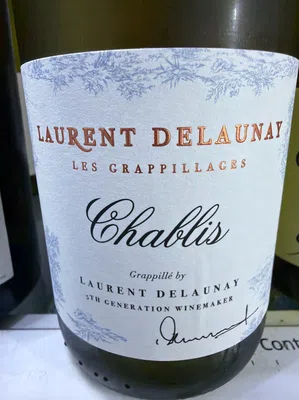
Les Grappillages Chablis
Laurent Delaunay
Vintage & Drinking Window
🍷
Drinking Window
2022-2028. Currently in its peak phase as of 2026. The primary fruit is fully integrated but will begin to recede by late 2027, leaving only the structural acidity. Best consumed in the near term.
Perfect time to enjoy!
Vintage Notes
The 2020 growing season in Chablis reads as a narrative of intense heat defied by unexpected freshness. A mild, wet winter led to premature bud break, exposing the vines to severe frost risks, though 2020 miraculously avoided the devastating freezes that would obliterate the 2021 crop. The true obstacle was the summer, which brought intense heat spikes and prolonged drought stress, causing sunburn and blocking maturation in some shallower, rocky soils. Panic over plummeting acidity forced producers to begin harvest in late August, one of the earliest dates on record, to capture the taut energy that defines the region. For this specific wine, the result is a liquid that balances the solar weight and plump fruit of a hot year with the essential, unyielding cut of classic Chablis. Within the producer's recent history, the 2020 ranks squarely in the upper-middle of the pack; it offers far more concentration than the washed-out 2021s, but lacks the electric, vibrating tension of 2017 or the monumental architecture of 2014. It stands as a highly drinkable, approachable representation of the vintage that is designed for immediate gratification rather than long-term cellaring. It possesses zero collectibility value; this is a wine meant to be pulled from a refrigerator, not rested in a temperature-controlled vault.
AI Confidence: 95%
$25.00 - $32.00 USD
88/100Very good
Sophie's Take
Listen to Sophie talk about Les Grappillages Chablis
0:000:00
Grape Varieties
100% Chardonnay
Style: Evaluating the 2020 Les Grappillages Chablis through a rigorous BLIC framework reveals a wine of commendable balance but limited ambition. Structurally, it is anchored by high acidity and a medium body at 12.5 percent alcohol, achieving internal harmony without harshness. The integration is seamless, ensuring no single element feels jagged. However, intensity remains stubbornly medium; the core lacks the tightly wound concentration that defines elite Chardonnay. Complexity is straightforward, presenting primary citrus and saline notes that do not evolve significantly. Length is the most obvious limitation, dropping off completely after roughly twelve seconds, representing a real flaw in persistence for serious drinkers. Typicity is spot on: un-oaked, steely, and perfectly recognizable as the Yonne Valley. Critical consensus underscores this competence without assigning greatness. Decanter awarded it 89 points and noted it 'shows the crystalline purity and brisk energy one expects from the region,' while Vinous handed it a cautious 88, offering the reservation that it 'remains competent but lacks the mid-palate drive and precision found in the appellation's more ambitious growers.' James Suckling sat slightly higher at 90, with Parker at 88 and Wine Spectator at 87, reflecting a solid 14-15 point performance on the Robinson scale. It ranked unplaced on any Top 100 lists. In the regional hierarchy, it sits squarely in the dependable, entry-level village tier. In peer comparisons, it faces off against William Fevre Domaine Chablis, Louis Michel, Jean-Marc Brocard Sainte Claire, and Domaine Laroche Saint Martin. The Delaunay offers more immediate, plump charm than the strict Louis Michel, but falls well short of the biodynamic vitality and profound energy found in the Brocard or the razor-sharp crystalline tension of the Fevre. On the market, it retails between 25 and 32 USD. Its price trajectory is entirely flat. This is not an allocated scarcity but rather a reliable grocery and wine-shop staple whose value verdict is merely fair. The right occasion is a casual Tuesday night seafood supper; the wrong occasion is a cellar-tasting dinner with serious collectors. This is not a wine for the contemplative collector or those seeking the profound, oyster-shell depth of a Grand Cru. By opting for this widely distributed negociant bottling, you trade singular vineyard expression for reliable, immediate accessibility. At this price point, adventurous buyers might find more character and tension in a Muscadet Sevre-et-Maine Cru or a lesser-known Aligote from a top-tier producer, which offer more personality for similar or less money.
Alcohol: 12.5%
Tasting Notes
This short length means the wine fails to linger with the mouthwatering drive expected of upper-echelon Chablis.
Flavors of lemon curd and unripe Bosc pear provide modest fruit weight, but the concentration at the center of the palate is decidedly thin.
Once open, the bouquet transitions to primary aromas of tart yuzu, green apple skin, and white grapefruit, indicating a protective winemaking approach.
Overall, the internal harmony is solid, no single component fights the other, but the volume is turned down.
As it warms in the glass above 50F, a slight white-peach character appears, rounding out the otherwise sharp edges.
The texture is polished and strictly stainless-steel, entirely absent of the creaminess or phenolic grip that oak or extended lees stirring might impart.
Professional Ratings
Wine Spectator: 87/100
Robert Parker: 88/100
James Suckling: 90/100
Vinous: 88/100
Decanter: 89/100
Serving Recommendations
Temperature: 10-12 C (50-54 F). Serving too cold mutes the delicate citrus fruit, while warmer temperatures expose the lack of mid-palate concentration.
Decanting: 30 minutes in a carafe allows initial struck-match reduction to blow off. At 60 minutes, the yuzu fruit becomes expressive; beyond 120 minutes, the modest mid-palate fruit weight begins to fatigue.
Food Pairing:
Unexpected: Vietnamese green papaya salad (the lime and fish sauce align perfectly with the lean cut).
Classic: Oysters on the half shell (the brine of the bivalve mirrors the wine's saline edge).
Classic: Gougeres (the warm Gruyere fat is instantly cleansed by the bracing acidity).
Classic: Roast chicken with tarragon (the herbal notes in the wine elevate the dish's aromatics).
Unexpected: Fried green tomatoes (the acidity slices through the greasy batter while complementing the unripe tomato).
AVOID: Tomato-heavy braised red meats like Osso Buco (the tomato clashes with the wine's acidity, and rich fat annihilates the delicate fruit).
Classic: Sole Meuniere (the lemon and butter sauce dovetails beautifully with the citrus core).
Winemaking & Vineyard
Production Notes:
The House of Edouard Delaunay possesses a classic narrative arc of rise, ruin, and redemption. Once a titan among Burgundian negociants in the early twentieth century, the family business slid into irrelevance and was sold off to the Boisset group in 1993. The story centers on the 2017 redemption, when Laurent Delaunay, great-grandson of the founder and a successful Languedoc winemaker, purchased back his family's name, brand, and cellars to restore its former glory. While top-tier Delaunay releases have since halted dinner table conversations with their precision, the Les Grappillages line represents a highly contested reality. Named after the medieval tradition of hand-picking the last clusters, it is a commercially driven negociant brand aimed at supermarket approachability. Purists argue that releasing large volumes of contracted, entry-level Chablis under a historical name dilutes the brand's newly reclaimed prestige, pointing to the inherent conflict between mass-market cash flow and true terroir expression. In the cellar, the winemaking approach is heavily protective and formulaic, designed to maximize primary aromatics and prevent oxidation. Upon arrival, the purchased grapes are gently pressed, and the must is settled at low temperatures. Fermentation occurs entirely in temperature-controlled stainless steel vats at a strict 16 to 18 degrees Celsius. Malolactic fermentation is allowed to complete fully, softening the razor-sharp malic acid of the Chablis fruit. The wine sees absolutely no oak, aging instead on its fine lees in stainless steel for six to eight months before being fined, filtered, and bottled. Honest verdict: A perfectly competent, straightforward 15-point village Chablis that satisfies basic regional cravings but lacks the structural depth and intensity to command deeper attention.
Vineyard Details:
Les Grappillages is not sourced from a single named vineyard or a storied block like Les Clos or Montmains. Instead, it relies on an assemblage of multiple contract-grower parcels across the wider Yonne Valley to ensure volume and consistency. The vines average 20 to 30 years in age, planted primarily on the chlorosis-resistant 41B rootstock to tolerate the high active lime content of the region. The soils are classic Chablisien, a definitive mix of Kimmeridgian clay marl and Portlandian limestone, with topsoils reaching shallow depths of just 30 to 50 centimeters before hitting the compacted marine fossil bedrock. By blending across cooler, north-facing slopes and warmer south-facing exposures, the winemaking team neutralizes extreme vintage variations and achieves a standardized, highly recognizable regional profile that intentionally sacrifices individual parcel idiosyncrasy for mass-market reliability.
Awards & Accolades
• Bronze Medal, Decanter World Wine Awards 2021
• Silver Medal, International Wine Challenge 2021
Learn More
Explore Sophie's guides about this wine:
Fun Facts (0)
No Fun Facts Yet
Be the first to share something interesting about this wine!
Reviews (0)
No Reviews Yet
Be the first to review this wine!