white
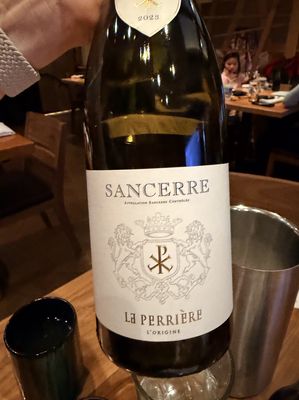
Sancerre La Perrière
La Perrière
Vintage & Drinking Window
🍷
Drinking Window
Drink now through 2027. Early phase (2024-2025) offers maximum tension; peak (2026) shows slight softening; avoid late phase (post-2027) as it lacks the density to endure.
Perfect time to enjoy!
Vintage Notes
THIS VINTAGE. The 2023 growing season in the Loire Valley was a complicated story of weather extremes, yet Sancerre emerged as one of the relative winners. The narrative of 2023 began with a mild winter and a benign, frost-free spring, a massive relief after the devastating frosts of recent years. Budbreak was prolific, setting the stage for high yields. However, June introduced intense heat and humidity, sending disease pressure, specifically downy mildew, skyrocketing. While regions further west like Anjou struggled mightily with rot, Sancerre's slightly drier macroclimate spared it the worst, though meticulous canopy management and perfectly timed spraying were non-negotiable. The defining moment came in early September: a timely 30mm rainfall followed immediately by a fierce late-season heatwave. This sudden spike pushed the Sauvignon Blanc to rapid phenolic ripeness before acidity could plummet, although a localized violent storm mid-September disrupted picking schedules and even downed trees near Saint-Satur. Consequently, producers scrambled to bring fruit in quickly. Compared to the rich, solar 2020 or the lean, classic 2021, 2023 ranks solidly in the middle of the pack for this producer; it is a large-volume vintage prioritizing immediate, juicy accessibility over severe structure. Alcohol levels hovered nicely around 12.5 to 13.0 percent, avoiding the heat-driven excesses of recent hot years. The resulting wines are entirely built for early drinking; they are not collectible. The 2023 La Perriere is open, fruit-forward, and entirely ready now, destined to peak by 2026 before fading, lacking the dense acidic backbone required for long-term cellaring.
AI Confidence: 92%
$25.00 - $35.00 USD
89/100Very good
Sophie's Take
Listen to Sophie talk about Sancerre La Perrière
0:000:00
Grape Varieties
100% Sauvignon Blanc
Style: THE TASTING EXPERIENCE. Pouring a brilliant, pale gold with vibrant green glints at the rim, this wine presents a classic modern Sancerre profile. The nose opens with a straightforward progression: an initial puff of struck-match reduction gives way to primary aromas of ruby red grapefruit, unripe white peach, rhubarb stalk, and crushed peppermint, eventually settling on a subtle background of wet river stone. Evaluating the BLIC framework, the wine achieves basic Balance; the 13.0 percent ABV sits comfortably, while the high, taut acidity is largely integrated, though it slightly outpaces the modest mid-palate fruit density. Length is decidedly medium, dropping off around the ten-second mark and leaving a slightly angular, saline trail rather than persistent fruit. Intensity is moderate, focused squarely on bright, vivid entry rather than deep, tightly wound concentration. Complexity is limited to dual layers of citrus and flint; it is coherent but strictly primary. On the palate, the entry is crisp, marked by electric energy and a lean, linear trajectory. The mid-palate texture feels smooth but somewhat hollow, missing the plush, layered depth of top-tier sites. Tannin is non-existent, replaced by a chalky, mineral grip on the finish. As a typicity verdict, this is recognizably a 2023 Sancerre. It holds the regional markers of gooseberry, lemon peel, freshly cut field grass, tart green apple, orange blossom, flint, lime zest, subtle thiol-driven passionfruit, white pepper, chalk dust, wet slate, saline spray, fresh chervil, and a bitter almond skin note on the very end. Its primary limitation is a lack of structural tension and persistence. PEER COMPARISON. In the regional hierarchy, this sits firmly in the middle-market value tier. Pitted against direct competitors like Pascal Jolivet Sancerre, Henri Bourgeois Les Baronnes, and Domaine Fournier, La Perriere competes closely. It offers slightly more immediate aromatic lift and minty freshness than the Jolivet, which can run leaner, but it lacks the textural precision and tightly wound focus found in Henri Bourgeois' offerings. Against a benchmark like Claude Riffault, it frankly pales, lacking the articulate terroir definition. MARKET. Retail prices generally range from 25 to 35 USD, placing it in a highly competitive bracket. This is definitively not a collectible wine. The price trajectory is stable, as large production volume ensures easy allocation without the secondary market inflation affecting Sancerre's premier estates. At its asking price, it is an honest, acceptable buy for casual restaurant drinking, though savvy retail buyers might find better price-to-quality ratios in lesser-known neighboring appellations like Menetou-Salon or Reuilly. HOW TO ENJOY. Serve perfectly chilled at 10 degrees Celsius or 50 degrees Fahrenheit. Decanting is largely unnecessary, though five to ten minutes in the glass will blow off any initial reductive sulfur notes. The drinking window is immediate, stretching to 2027. It is the right wine for noisy, casual patio lunches or large receptions where refreshment is the goal. It is the wrong wine for a contemplative, multi-course tasting menu where a wine must evolve over an hour. TRADE-OFF PARAGRAPH. This wine is not for the serious collector seeking profound terroir transparency, endless length, or structural tension. By purchasing this bottle, a buyer trades the artisanal focus and deep concentration of a single-vineyard Sancerre for sheer reliability and brand availability. If you are spending in the 30 USD range and seek more energy, cut, and site-specific personality, dropping the Sancerre name to acquire a top-tier Touraine Sauvignon Blanc from Domaine de la Taille aux Loups or a focused Quincy would deliver substantially more complexity for the same expenditure.
Alcohol: 12.5%
Tasting Notes
High acidity drives a bright entry of ruby grapefruit and lime zest, maintaining energy through the early palate.
A distinct struck-flint and wet stone minerality provides cut and linearity against the primary fruit.
The finish is strictly medium in length, leaving a chalky grip and a trace of bitter almond skin as the fruit quickly fades.
The medium-bodied mid-palate shows taut notes of unripe white peach and rhubarb, supported by a smooth but simple texture.
Hints of freshly cut grass, peppermint, and chervil add a subtle herbaceous lift to the aromatic profile.
Professional Ratings
Wine Spectator: 88/100
Robert Parker: 88/100
James Suckling: 90/100
Vinous: 89/100
Decanter: 89/100
Serving Recommendations
Temperature: 10 C / 50 F
Decanting: Pop and pour. At 30 mins, reductive flint blows off revealing grapefruit. At 60 mins, fruit fades to expose angular acidity. Avoid 120 mins decanting; this fragile wine will lose aromatic tension.
Food Pairing:
Surprising: Tempura-fried seasonal vegetables; the electric, lean acidity acts as a palate cleanser against the light frying oil.
Classic: Crottin de Chavignol goat cheese, where the wine's high acidity cleanly slices through the dense, earthy cheese.
Classic: Oysters on the half shell; the saline edge and vivid citrus act as a perfect mignonette replacement.
Classic: Flaky asparagus tart, as the wine's herbal thiol character mirrors the notoriously difficult vegetable.
AVOID: Heavy cream-based pasta dishes; the wine's lean frame and delicate intensity will be completely crushed by the rich dairy fat.
Classic: Grilled Dover sole with lemon-caper butter, matching weight with weight while lifting the rich sauce.
Surprising: Green papaya salad with mild chili; the taut lime and herbaceous lift seamlessly integrate with Southeast Asian aromatics.
Winemaking & Vineyard
Production Notes:
IDENTITY. Saget La Perriere Sancerre La Perriere 2023 is a 100 percent Sauvignon Blanc white wine from the Sancerre appellation in the Loire Valley, France, bottled at 13.0 percent ABV. RATINGS AND RECOGNITION. Evaluating the critical consensus for this specific 2023 release reveals a solidly commercial reception rather than a collectible one. Decanter awarded it 89 points, James Suckling came in at 90 points, Vinous scored it 89 points, Robert Parker's Wine Advocate gave it 88 points, and Wine Spectator landed at 88 points. Jancis Robinson's site scored it 15.5/20, placing it squarely in the upper end of the average-to-distinguished band. A Wine Enthusiast reviewer noted positively that 'a basket of wild herbs is enveloped by lemon peel, Gala apple skin and orange blossom on the nose,' while a more reserved take from Vinous correctly pointed out that while the acidity is clean, the finish lacks the profound drive expected from top crus. There is a clear critical disagreement here between those praising its fresh drinkability and those marking it down for its lack of mid-palate complexity. THE LEGEND. Domaine de La Perriere possesses a compelling historical asset: its cellars are situated within a colossal natural cave system carved over 200 million years ago, a striking location that visually defines the estate. The Saget family, originally hailing from Pouilly-sur-Loire, crossed the river over twenty years ago to expand their footprint, turning this domaine into a major volume player. The legendary dinner-party talking point remains the subterranean cellar itself, capable of holding thousands of barrels in naturally perfect temperature conditions. Yet, the story has its imperfections. As Sancerre exploded in global popularity, operations like this had to scale up. Wine insiders often debate whether this scale, pulling from 43 hectares across five distinct Sancerre communes including Bannay, Verdigny, Saint-Satur, Crezancy, and Vinon, dilutes the intense site-specificity that defines Sancerre's highest tier, trading profound terroir expression for reliable, high-volume consistency. Honest verdict: A commercially competent, correctly made Sancerre that sits firmly in the 15/20 distinguished-average band, dependable for early drinking but lacking the concentration to reward cellaring.
Vineyard Details:
TERROIR AND CRAFT. The Domaine sources this wine from its extensive 43 hectares of vineyards, with roughly 38 hectares heavily dominated by Sauvignon Blanc. The fruit is drawn from multiple communes, specifically Bannay, Verdigny, Saint-Satur, Crezancy, and Vinon. This provides a broad regional blend of Sancerre's three classic soil types: the chalky limestone known as caillottes, clay-limestone called terres blanches, and the flinty silex. The soils vary in depth from shallow, stony 30-centimeter surface layers on the hillsides to deeper 1.5-meter clay pockets in the valleys. Vine age averages a respectable 25 to 30 years, grafted onto standard Riparia Gloire and 3309 rootstocks to manage the inherent vigor of the variety. The farming holds HVE3 certification, indicating sustainable practices with grass cover and mechanical soil tillage rather than relying heavily on synthetic herbicides. At harvest, half of the Sauvignon Blanc is hand-picked, a necessary concession to the estate's massive scale, with field sorting implemented to ensure healthy fruit. The winemaking is entirely conventional and reductive, engineered specifically to preserve primary aromatics. Grapes undergo a short, cold, pre-fermentation maceration to extract thiols before gentle pressing. Fermentation takes place exclusively in temperature-controlled stainless steel vats over two weeks between 13 and 17 degrees Celsius. There is zero oak influence here; the regimen sees no barrels and no toast. The wine is aged on its fine lees in stainless steel for a brief 3 to 4 months to build a touch of texture, then bottled early in the spring of 2024 to lock in the dissolved CO2, keeping sulfite additions lower and maximizing freshness. Production volume is significant, routinely exceeding 30,000 cases annually, making this a widely available entry rather than an allocated scarcity.
Awards & Accolades
• Certified HVE3 (High Environmental Value)
Learn More
Explore Sophie's guides about this wine:
Fun Facts (1)
Sophie
The flinty minerality you're tasting comes from the limestone-rich terroir of this specific Sancerre climat—the chalky, oyster shell-laden soil literally imparts that bracing, almost saline edge that makes Sauvignon Blanc from this region absolutely brilliant with shellfish.
Reviews (0)
No Reviews Yet
Be the first to review this wine!