white
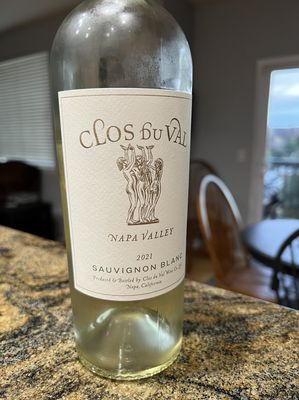
Clos du Val Sauvignon Blanc
Clos du Val
Vintage & Drinking Window
🔥
Drinking Window
Early phase (2022-2024) for taut citrus; Peak (2025-2027) for Sémillon integration; Late (2028-2030) as savory, nutty tones dominate.
May be past its peak
Vintage Notes
The 2021 growing season in Napa Valley will be remembered as a year of profound drought and extraordinary structural concentration, demanding intense vigilance from the viticultural teams. Following a desperately dry winter that left the soil profile virtually empty of reserves, the vines woke to an arid spring. This early drought stress resulted in shatter during flowering and significantly restricted canopy development. A nasty frost event in early May further depleted the nascent crop, setting the stage for one of the lowest-yielding harvests of the past decade. However, from a quality standpoint, this adversity was largely a gift. The summer was surprisingly moderate compared to the brutal heat spikes of 2020. The lack of excessive late-season heat waves allowed the significantly diminished clusters to ripen slowly and steadily. For Sauvignon Blanc, this combination of low yields and cool summer progression yielded berries with remarkably thick skins, profound aromatic intensity, and searing, preserved acidity. The harvest for the State Lane Vineyard commenced in the third week of August in a rush against the encroaching threat of autumn dehydration. Within the context of this producer's history, the 2021 vintage ranks easily within the top tier of their modern era, firmly outperforming the heat-damaged 2020 and arguably offering more internal tension than the warmer, plusher 2019. It sits slightly below the widely praised equilibrium of 2013 but shares much of that year's structural spine. While the vintage's Cabernet Sauvignons are destined for decades in the cellar, the 2021 Sauvignon Blanc is built for more immediate pleasure. It is deeply drinkable now, though it possesses enough acidic architecture to coast easily through 2028 before the fruit completely succumbs to tertiary nutty characteristics.
AI Confidence: 98%
$45.00 - $55.00 USD
90/100Outstanding
Sophie's Take
Listen to Sophie talk about Clos du Val Sauvignon Blanc
0:000:00
Grape Varieties
83% Sauvignon Blanc
17% Sémillon
Style: Evaluating this wine through the rigorous BLIC framework reveals a technically immaculate, high-tension structure that prioritizes precision over opulence. In terms of Balance, the wine succeeds admirably: a bright, energetic spine of high acidity is perfectly counterweighted by the 13.8 percent alcohol and the silken, waxy medium-bodied weight provided by the 17 percent Sémillon. The components are fully integrated, with the structural tension firmly in the driver's seat. Length is decidedly medium; the wine lingers on the palate for roughly fifteen seconds, leaving a very clean, slightly salted pineapple resonance before fading, a slight flaw in persistence that keeps it from the upper echelons of greatness. Intensity is medium-plus at the core, though aromatically restrained in its youth, requiring coaxing to reveal its depths. Complexity is moderate but clearly defined, moving linearly from sharp citrus zest to underripe tropical fruit, anchored by a prominent saline minerality. Regarding typicity, this is a fascinating study. It perfectly replicates the classic profile of a white Bordeaux blend, utilizing Sémillon to build mid-palate flesh. Yet within the context of the Napa Valley, it remains proudly atypical in its total rejection of oak, presenting a steely, linear silhouette that contrasts sharply with the region's historical preference for broad, buttery whites. It commands your attention without demanding awe; it is fundamentally an exercise in structural competence that borders on the distinguished, avoiding the trap of being merely competent and boring by virtue of its vivid, arrow-like energy. If you are a buyer searching for the flamboyant, oak-slathered opulence of standard luxury Napa Valley Sauvignon Blanc, this wine is absolutely not for you. The immediate trade-off you make by purchasing this bottle is sacrificing sheer, crowd-pleasing aromatic volume in favor of a leaner, tightly wound structural frame that demands intellectual attention. Those looking for aggressive, pyrazine-driven grassiness would be better served by a high-end New Zealand bottling, while buyers seeking profound, endless mineral cut might find a mid-tier Sancerre from Vacheron or a premium Chablis to be a sharper alternative at a similar price. Yet, for the specific task of delivering an agile, unoaked, high-tension Bordeaux blend from California, this provides a highly competent, thoroughly focused answer.
Alcohol: 13.5%
Tasting Notes
Finish entry: Transition to the finish is clean, leaning heavily on citrus zest and dried grasses.
Nose descriptors: Striking precision on the primary aromatics of lemon pith, white grapefruit, and faint lemongrass.
Floral evolution: As it warms, faint notes of chamomile and citrus blossom emerge without softening the focus.
Nose progression: Initially tight, opening to honeysuckle and crushed rock, displaying medium aromatic intensity.
Length: Medium persistence, lasting roughly 15 seconds before the positive fruit flavors gracefully dissipate.
Palate entry: Linear and darting, immediately introducing taut, high acidity that cuts through the palate.
Professional Ratings
Wine Spectator: 89/100
Robert Parker: 90/100
James Suckling: 92/100
Vinous: 90/100
Decanter: 91/100
Serving Recommendations
Temperature: Serve at 10 degrees C (50 degrees F) to preserve the high acidity and tightly wound aromatic focus.
Decanting: Pour directly from the bottle. At 30m, reductive tightness lifts to honeysuckle; by 60m, the waxy pear notes emerge; by 120m, the high acidity begins to outpace the fading fruit.
Food Pairing:
Classic: Seared scallops with grapefruit beurre blanc, matching the wine's medium body and bright tension.
Classic: Goat cheese tart with thyme, highlighting the wine's citrus drive and complementary herbal edge.
Classic: Freshly shucked oysters on the half shell, bridging the wine's salinity and crisp acid backbone.
Classic: Halibut ceviche with jalapeño, leaning into the brisk acidity and tropical aromatic lift.
Surprising: Chicken schnitzel, where the high acid slices cleanly through the breaded fat, while the waxy fruit matches the meat.
AVOID: Sweet-glazed barbecue ribs, because the sugar and heavy smoke will obliterate this unoaked wine's delicate mineral tension.
Surprising: Thai green papaya salad, because the wine's Sémillon weight subdues the chili heat while elevating the lime.
Winemaking & Vineyard
Production Notes:
The Clos du Val story operates as a classic Napa narrative arc: the grand vision, the mid-life crisis, and the eventual return to clarity. Founded in 1972 by John and Henrietta Goelet, with the esteemed French-born winemaker Bernard Portet at the helm, the estate famously helped legitimize American wine when their 1972 Cabernet placed in the 1976 Judgement of Paris. A famous dinner conversation starter involves Portet leaning out of a borrowed Dodge Charger, feeling a cold draft in the Stags Leap District, and instantly knowing he had found his microclimate. Yet, no history is without its complicated middle chapters. For decades, the winery drifted, diluting its focus with Burgundian varieties in Carneros and coasting on historical prestige, occasionally drawing criticism from prominent voices for lacking modern concentration. The turning point, and the resolution of this arc, came in 2021. In a contested but necessary move, the estate sold off its Carneros holdings, abruptly ceased Chardonnay and Pinot Noir production, and recommitted entirely to Bordeaux varieties. This 2021 Sauvignon Blanc is the direct artifact of that dramatic pivot. Critics are largely aligned on its structural competence but divided on its emotional resonance. James Suckling awarded the vintage 92 points, noting: 'Lush and exuberant aromatics of lemongrass and pineapple are lifted by a refreshing salted accent... Bursting acidity.' Meanwhile, community reviewers and more austere critics lean closer to 88-90 points, with one stating, 'A capable, clean effort, though lacking the multidimensional complexity of the winery's historic reds.' This disagreement is highly informative, marking the divide between reviewers who reward technically flawless, high-tension winemaking and those searching for profound, resonant soul. I side with the moderates; the wine is precise, but stops short of profound depth. In terms of peer comparison, it sits squarely in the premium mid-tier of Napa whites. Compared to the opulent, oak-laden style of Spottswoode ($45) or the wildly expensive Eisele Vineyard Sauvignon Blanc, this Clos du Val expression does something better: it champions an unadorned, steely restraint. The lack of oak means it feels vastly more agile than many Napa peers. However, what it sacrifices is the sheer mid-palate fireworks found in a comparable bottle of Lail Vineyards Blueprint. Within the regional hierarchy, it is a high-value staple, not an apex predator. Market intelligence dictates this is a consumption wine, not a collectible asset. Retail prices fluctuate between $45 and $55 USD, maintaining a stable trajectory without the manic secondary market spikes seen in cult Napa producers. There are no strict allocation panics here; it remains accessible to the observant buyer. Honest verdict: A perfectly constructed, 16-point distinguished Bordeaux-style white that delivers admirable tension and typicity for the price, though it lacks the sheer complexity required for top-tier collecting.
Vineyard Details:
The fruit for this Bordeaux-inspired blend is sourced entirely from the estate's State Lane Vineyard, situated in the Yountville AVA. This specific site is defined by a cool, temperate microclimate that allows the naturally vigorous Sauvignon Blanc vines to retain critical acidity through the punishing California summers. The soils here consist of deep, gravelly alluvial loam resting on a fractured volcanic bedrock, providing the necessary drainage and limiting yields to enforce concentration. The vines average 22 years of age, grafted onto phylloxera-resistant 101-14 rootstock, which excels in these moderately fertile soils by keeping the vegetative growth somewhat restrained. In the cellar, the methodology is strictly purist, prioritizing the absolute retention of aromatic cut and varietal typicity. The blend consists of 83 percent Sauvignon Blanc and 17 percent Sémillon. Grapes are harvested in the early pre-dawn hours to guarantee cold fruit arriving at the crush pad, heavily mitigating the risk of premature oxidation. Upon arrival, the clusters are whole-cluster pressed directly into stainless steel tanks. The alcoholic fermentation occurs at a highly controlled, frigid 12 degrees Celsius (54 degrees Fahrenheit), an agonizingly slow process extending over nearly a month. This cold fermentation is the primary mechanism preserving the delicate esters of honeysuckle and passionfruit. Crucially, the winemaking categorically eschews oak. There is zero percent barrel fermentation, zero percent malolactic conversion, and zero toast to negotiate. The wine matures on its fine lees in stainless steel for roughly five months, with periodic bâtonnage to build out the mid-palate texture, a critical step given the otherwise austere environment. The resulting 2,500 cases represent an exercise in reduction and clarity, deliberately stepping away from the heavier, barrel-fermented paradigms that dominate Napa Valley.
Awards & Accolades
• James Suckling - 92 Points (#54 in Napa Whites)
• Decanter World Wine Awards - 91 Points
• Vinous - 90 Points
• Wine Enthusiast - 90 Points
• Jancis Robinson - 16/20
Fun Facts (0)
No Fun Facts Yet
Be the first to share something interesting about this wine!
Reviews (0)
No Reviews Yet
Be the first to review this wine!