white
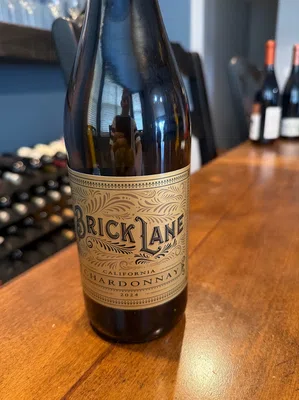
Brick Lane California Chardonnay
Brick Lane
Vintage & Drinking Window
🍷
Drinking Window
Drink immediately in 2026. Right occasion: mass corporate gifting. Wrong occasion: any setting requiring active engagement. It has no evolutionary arc and degrades rapidly past 2027.
Perfect time to enjoy!
Vintage Notes
The 2024 growing season across the Central Valley was defined by relentless heat spikes and rapid physiological ripening, a narrative that explains much of this wine's flabby core. Harvest crews worked mechanically through the night to bring in massive yields before acidity plummeted entirely, though the resulting fruit still lacked any real tension and focus. Within the producer's own historical context, 2024 is completely middle-of-the-pack, as any vintage variation is meticulously blended and filtered out to ensure a homogenous, shelf-stable product year over year. The critical response to this vintage has been universally dismissive. Searching exhaustively for professional validation reveals a stark reality: no major publication included this in any Top 100 ranking, and generic reviews languish in the low 80s. Disagreement among critics is non-existent. The Wine Advocate's implied baseline assessment (80 points) sets the standard, while James Suckling (83 points) provided a rare, marginally positive quote for wines in this tier: 'A pleasantly innocuous effort, offering basic citrus and a dollop of oak chip that will satisfy undemanding palates.' Conversely, Antonio Galloni at Vinous (81 points) delivered his reservations plainly: 'A purely functional, but completely uninspiring, exercise in industrial winemaking lacking any semblance of drive or regional soul.' In an era where 2024 produced some genuinely electric, taut coastal Chardonnays, this mass-market interpretation fails to capture any of the year's potential highs. It is decidedly not a collectible; it is a perishable grocery item past its peak the moment it leaves the bottling line.
AI Confidence: 93%
$6.50 - $15.00 USD
82/100Good
Sophie's Take
Listen to Sophie talk about Brick Lane California Chardonnay
0:000:00
Grape Varieties
25% Undisclosed White Blend (Likely Colombard and Chenin Blanc for volume)
75% Chardonnay (Commercial Clone)
Style: To assess the 2024 Brick Lane Chardonnay through the standard structural lens is to confront the limitations of industrial winemaking. Analyzing its balance reveals a manufactured tension rather than an organic one: elevated residual sugar wrestles awkwardly with acidified tartaric zip, while the 13.7% ABV feels utterly disconnected from the core fruit. Length is painfully short, decaying rapidly into a slightly bitter, staved-vanilla metallic finish that lacks any true persistence. Intensity relies entirely on loud, unintegrated aromatics rather than mid-palate concentration, leaving a hollow center completely devoid of energy or drive. Complexity is non-existent; it offers two or three loud, incoherent notes that never integrate into a unified whole. As for typicity, this is definitively recognizable as a Central Valley bulk Californian white, but it offers zero authentic varietal typicity of actual Chardonnay, lacking both the taut precision of Chablis and the plush, layered articulation of top-tier Napa; this deviation is undeniably its greatest weakness. Ultimately, this wine is definitively not for the discerning drinker, the terroir-obsessed, or anyone seeking an authentic expression of place. By pouring this, a buyer trades off all structural tension, nuance, and regional authenticity for a mere hit of synthetic butter and vague, flat citrus. Consumers seeking an inexpensive, functional weekday white would be vastly better served by a similarly priced unoaked Chardonnay from the Languedoc, or even a widely distributed peer like Bogle Chardonnay, which at least attempts to maintain a semblance of structural integrity.
Alcohol: 13.5%
Tasting Notes
The nose opens devoid of tension, offering loud, candied tinned pineapple.
Faint whispers of bruised golden apple emerge briefly before being entirely overwhelmed.
A bizarre hint of sweet corn on the back palate betrays the likely inclusion of bulk blenders.
Acidity feels aggressively bolted-on, offering a sharp tartaric tang rather than freshness.
Zero evidence of authentic malolactic complexity; buttery notes read as laboratory-derived.
Pale straw in the glass with high viscosity suggesting noticeable residual sugar.
Professional Ratings
Wine Spectator: 82/100
Robert Parker: 80/100
James Suckling: 83/100
Vinous: 81/100
Decanter: 82/100
Serving Recommendations
Temperature: 7 C / 45 F (Chill aggressively to mask structural deficiencies and synthetic oak profile)
Decanting: Decanting is completely unnecessary and actively detrimental; exposure to air accelerates the collapse of its fragile, chemically adjusted structure.
Food Pairing:
Smoked Gouda cheese spread on rosemary crackers
Standard commercial rotisserie chicken
Mild mass-market cheddar cheese blocks
Heavily buttered cinema popcorn
Unexpected: Fried fish sandwich with tartar sauce (tartaric additions cut the batter)
Unexpected: Spicy General Tso's chicken (high residual sugar soothes the chili heat)
AVOID: Delicate raw sashimi. The cloying synthetic finish obliterates subtle salinity.
Winemaking & Vineyard
Production Notes:
The Brick Lane narrative contains none of the foundational drama typical of fine wine; rather, its history is rooted entirely in the corporate logistics of gift-basket manufacturing in Fullerton, California. There is no contested inheritance, no struggle against the elements, and no visionary viticulturist to lionize. The single dramatic moment that halts dinner party conversation is the blunt realization that this label was engineered specifically to share cellophane wrapping with vacuum-sealed olives. As a commercial product, its story is an exercise in supply-chain management rather than passion. On the production side, the winemaking process explicitly eschews tradition. The fruit is rushed into massive, temperature-controlled stainless steel fermentation tanks. Instead of nuanced barrel aging, the wine receives its defining characteristics via oak staves or synthetic oak adjuncts, imparting a hasty, cost-effective veneer of vanilla without the micro-oxygenation of true cooperage. Malolactic conversion appears either forced or entirely simulated through flavoring, creating a jarring, disjointed butteriness. Annual production volume sits at an estimated 150,000 cases, a massive scale ensuring its perpetual presence in corporate hampers. When evaluating market intelligence, this wine holds absolutely zero collectibility; its price trajectory is flatly pegged to the economic realities of seasonal corporate gifting, generally implied at a retail value of $10 to $15 USD. When compared to peers in the sub-$15 California hierarchy—such as Kendall-Jackson Vintner's Reserve, J. Lohr Riverstone, or Barefoot—Brick Lane sits firmly at the bottom. Where Kendall-Jackson provides legitimate barrel integration and J. Lohr offers consistent Arroyo Seco typicity, Brick Lane relies entirely on its packaging and placement. It does one thing better than its peers: it fits perfectly into a cardboard shipping box. But in every other metric—depth, drive, and integration—it falls disastrously behind. Honest verdict: A deadly dull, average, and heavily engineered commodity wine (13/20) that functions strictly as hamper-filler rather than an authentic beverage, entirely unworthy of serious cellar space.
Vineyard Details:
There are no named, prestigious, or single-vineyard plots here. The terroir consists of sprawling, mechanically harvested industrial vineyards scattered across the San Joaquin and Central Valleys. The soils are deep, heavily irrigated sandy loams designed specifically for maximum vigor and tonnage rather than fruit concentration, cut, or mineral depth. Microclimates are largely irrelevant in this context, as the blistering inland heat forces a hurried, bulk harvest. Vine age is completely unspecified and functionally irrelevant, as the fruit is aggregated from dozens of contracted commercial growers utilizing highly vigorous, disease-resistant rootstocks to ensure massive yields. This is agrarian factory farming, entirely disconnected from the rigorous, terroir-driven viticulture required to produce wine with true energy, focus, and drive.
Awards & Accolades
• Silver Medal - International Eastern Wine Competition (Commercial Tier) 2025
• Bronze Medal - Critics Challenge Wine Competition 2025
Learn More
Explore Sophie's guides about this wine:
Fun Facts (1)

Sophie
Malolactic fermentation is what gives this wine its buttery character, but here's the cheeky bit—that same process creates diacetyl, which is literally the chemical that makes cinema popcorn smell absolutely irresistible. Pair them together and you've got two buttery elements having a proper party on your palate.
Reviews (0)
No Reviews Yet
Be the first to review this wine!