Sophie, The Wine Insider
Oenologist, troublemaker, your new favourite drinking buddy
Duck Confit: Finding the Perfect Wine
Three Burgundian wonders that elevate France's greatest comfort food
Written by
Sophie, The Wine Insider
14 min read
2,750 words
Duck Confit: Finding the Perfect Wine
The Audio Edition
Listen to Sophie & Chad talk about Duck Confit: Finding the Perfect Wine
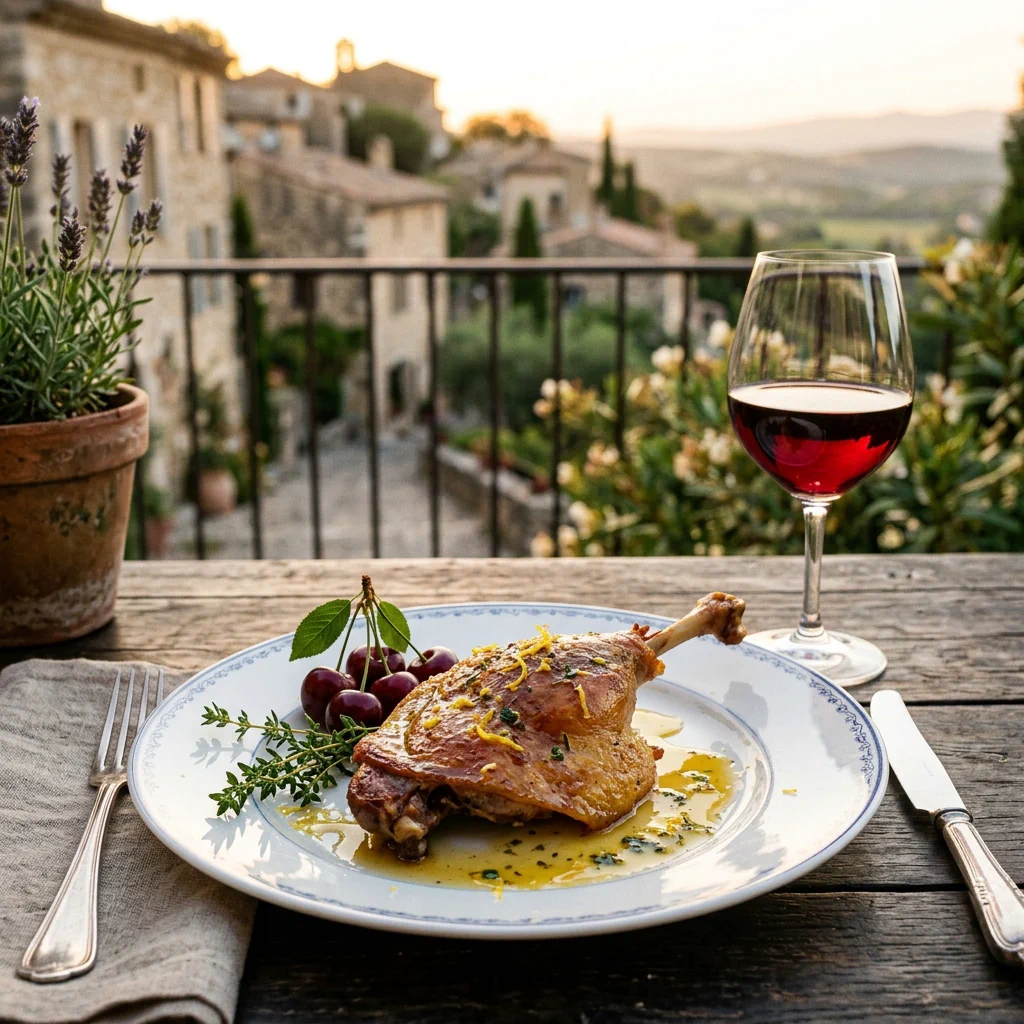
There are dishes that flirt with wine, and there are dishes that demand it. Duck confit—those mahogany-burnished legs slow-cooked in their own rendered fat until the meat surrenders from the bone—belongs firmly to the second camp. This is no demure little starter. It's a Gascon thunderclap, born of farmhouse necessity in southwestern France, perfected over centuries by cooks who understood that fat is not the enemy of flavor but its devoted patron. The skin shatters like brittle caramel. The flesh slumps into impossibly tender threads. And the whole magnificent mess sits there on the plate, glistening, waiting for a wine bold enough to keep up.
Pour the wrong bottle and the duck eats it alive. Pour the right one and you've engineered one of the great gastronomic conversations of all time—the kind the French have been having since Louis XIV was still picking out his curtains. Tonight we're settling the matter with three serious contenders, all built on the world's most graceful fat-fighter: Pinot Noir. One vrai Bourgogne from Santenay, one Californian upstart with an old-world accent, and one mature aristocrat that has been quietly minding its own business in the cellar since 2013. Spoiler: there are no losers here. But there is a winner.
Why Pinot Noir Was Built for This Job
Pairing wine with duck confit is a problem in fluid mechanics as much as flavor. Duck fat is generously laced with oleic acid—the same monounsaturated fat that makes olive oil a darling of cardiologists—and it coats the palate the way a slow-mo movie coats the eye. You need a wine with sufficient acidity to strafe that fat off the tongue between bites, but enough fruit and savory depth to mirror the duck's deeply roasted, slightly gamey character. Cabernet's tannins crash the party with hobnail boots. Chardonnay rolls over and apologizes. Pinot Noir, gloriously, does both jobs at once: bright red-fruit acidity for the lift, earthy umami undertones for the embrace.
The French figured this out roughly five minutes after they invented the dish. In Burgundy, duck and Pinot is gospel; in Gascony they'll happily reach for a Madiran or a Cahors, but those are tannic monsters bred for cassoulet, and we are not making cassoulet today. We are making the most elegant version of duck on earth. So we're reaching for the most elegant red on earth. Funny how that works.
The Oleic Acid Trick
Duck fat is roughly 36% oleic acid—the very same compound that makes extra-virgin olive oil a Mediterranean health hero. That's why a glass of acidic, structured red doesn't just complement duck confit; it actively helps your digestive system process the meal. Your nutritionist would call it lipid emulsification. I call it the most delicious loophole in nutrition science.
The Contenders
Three Pinots. Three philosophies. Three very different bottles I'd happily pour for a dinner party where the duck takes centre stage. We'll travel from a quietly brilliant Burgundian Premier Cru to a Sonoma showstopper, then finish with a fully-mature beauty from the Twomey cellars that's drinking right now at the apex of its arc. None of these wines is shy. All of them know exactly what they're for.
1. Santenay-Maladière Premier Cru 2022 — Burgundy's Best-Kept Secret
Let's start where Pinot Noir was born. Santenay sits at the southern tail of the Côte de Beaune, a sleepy little appellation that the Burgundy literati love precisely because the wine press doesn't. While everyone else is mortgaging the cottage for Volnay and Pommard, the savvy buyer slips quietly into Santenay and walks away with a Premier Cru for the price of a village-level bottle from a more famous neighbour. The 2022 vintage was, by most accounts, magnificent—warm but not hot, with the kind of late-season tension that turns mid-tier Burgundy into something that punches three weight classes above its postcode.
The Maladière vineyard runs along a stony, east-facing slope that drains beautifully and bakes just enough sun into the skins to give the wine its signature inner glow. This isn't a wallflower Pinot—it's a Burgundy with edges, with a savoury graphite streak, with that characteristic tension that only old-world reds seem to manage. At $45–65, it ought to be illegal.
Tasting Profile
Vivid wild strawberry, bing cherry, and a flicker of cranberry on the nose. Medium-bodied with silky tannins and that telltale Burgundian forest-floor undertone. The mid-palate brings mushroom, minerality, and a graphite spine that keeps everything pulled tight together. Then the finish—a sensational blood-orange acidity and a saline snap that holds for a solid 45 seconds. It demands contemplation, frankly.
Why It Works with Duck Confit
The blood-orange acidity carves through duck fat like a hot knife through butter, while the wine's earthy, mushroomy core mirrors the slow-roasted savoury tones of the leg. The bright cherry top notes echo the classic Gascon trick of finishing duck with a spoonful of cherry reduction. And those silky, well-integrated tannins? They scrub the palate without bullying the meat. C'est magnifique.
“Decanter awarded this Santenay 97 points—the highest score of any wine on this list, and the kind of mark that usually attaches itself to Premier Crus costing twice as much. James Suckling chimed in at 93. When the critics line up like that on a sub-$70 Burgundy, you stop reading reviews and start phoning your wine merchant.”
Sophie, drawing on the published ratings
Price-to-Plate
At $45–65, this Santenay costs roughly the same as a single duck confit at a decent Manhattan bistro. You're paying restaurant-entrée money for a wine that will outclass anything they pour by the glass for double the price. That's not a deal—that's daylight robbery in your favour.
A practical note on timing: this is a 2022 vintage with a drinking window that runs through about 2034. We're in its early phase right now, where the graphite, primary cherry, and stem spice are at their most exuberant. It will continue to evolve—the peak years are 2029 to 2032—but please don't let that talk you out of opening a bottle tonight. Young Burgundy with duck confit is its own kind of perfect.
2. Twomey Pinot Noir 2021 — California's Burgundian Soul
Twomey is the Pinot-and-Merlot-focused sister winery of Silver Oak, founded by the Duncan family back in 1999 with the explicit mission of making Burgundian-styled California Pinot. They source from cool, fog-kissed sites up and down the Russian River Valley, ferment whole-cluster where the vintage allows, and age in barrels chosen for restraint over showmanship. The result? A California Pinot that doesn't taste like California Pinot. Or, more precisely, a California Pinot that does, but with the gravitas of a wine that's been to finishing school in Beaune.
The 2021 vintage in Sonoma was a tightrope walk—drought conditions and cool nights conspired to produce small berries with intense skin-to-juice ratios. In other hands that means jammy, alcoholic monsters. In Twomey's hands it means concentration without weight. This bottle is energetic, perfumed, and built for a roasted bird. Critics noticed: 93 from James Suckling, 92 from Decanter.
Tasting Profile
The nose opens with an arresting burst of crunchy wild strawberries, ripe black cherry, and crushed rose petals—genuinely lovely. The mid-palate texture evolves dramatically, shifting from supple velvet into plump, gently gripping tannins coated in dusty minerals. Russian River Valley earthiness lurks underneath the fruit but never dominates. The finish carries lingering red fruit and a whisper of subtle baking spice. Pours a vibrant pale-to-medium ruby that gentles into a delicate red-rose rim.
Why It Works with Duck Confit
This is the bottle for the table that wants instant gratification—the duck arrives, the wine is poured, and there's no waiting for it to come around. The plump, fruit-forward attack stands up to crispy duck skin, the dusty mineral tannins clean up the fat, and the whole thing sings the same hymn as a classic cherry-pomegranate reduction. If you're serving duck confit to people who think they don't like Burgundy, this is your Trojan Horse.
“James Suckling's team scored this 93, calling out the wine's elegance and concentration. From a vintage that demanded patience and restraint in the cellar, that's not a participation trophy—that's a winemaker who knew exactly when to step back and let the fruit speak.”
Sophie, on the Twomey 2021
Price-to-Plate
At $45–64, Twomey lands in roughly the same neighbourhood as the Santenay—but the experience is almost a mirror image. The Burgundy is a study in tension; the Twomey is a study in ripeness. If your guests lean toward bigger, fruitier reds, this is the safer bet. If they lean classical, the Santenay still wins. Both at this price point feel slightly criminal.
3. Twomey Pinot Noir 2013 — The Aristocrat in the Library
Now we're getting interesting. The 2013 Twomey is the same producer, the same Russian River sourcing, but it's been quietly aging for over a decade. And right now—2026, the year you're reading this—it is sitting at the absolute peak of its arc, transitioning gracefully from the lush primary fruit of its youth into the kind of profound, savoury tertiary complexity that only time can grant a wine. This is what aged Pinot Noir tastes like. This is what the patient Burgundy collectors talk about at dinner parties when they want to make everyone else jealous.
Twomey's Russian River bottlings have always been built for the long haul, but the 2013 vintage was a particularly fortunate one—a warm, even growing season that produced wines with structural integrity and the patience to outlast their original release-day reviews. If you can find one (look at auction sites, library lists, and the better wine merchants), grab it. You're buying a time machine.
Tasting Profile
Succulent Bing cherry and wild strawberry jam meet a sophisticated layer of cardamom, white pepper, and baking spices on the nose. The palate is silky, refined, and unhurried—red fruits softened and deepened by the years, with bright acidity still keeping the whole thing aloft. Forest floor. A whisper of cured tobacco. The finish lingers with subtle oak and the kind of integration that makes you set the glass down between sips just to think about it.
Why It Works with Duck Confit
Tertiary, mature Pinot Noir is the platonic ideal of duck confit's dance partner. The savoury, almost umami quality the wine has developed in bottle mirrors the long, slow rendering of the duck. The acidity—still vivid after 13 years—handles the fat, and the spice notes echo the warming whole-clove and bay from a properly seasoned cure. Pour this for someone who already loves duck confit and watch them go quietly pale with joy.
“Wine Spectator scored the 2013 Twomey at 90 on release, but ratings tell only the first chapter. What time has done to this wine is the second, far better chapter—and it doesn't come with a number on it. Mature Pinot Noir is one of those rare assets that genuinely improves with age, and the 2013 is currently doing its best work.”
Sophie, on aged Russian River Pinot
Price-to-Plate
Library-released bottles of the 2013 typically run $55–85—a stretch over the younger options, but you're not paying for grapes anymore. You're paying for thirteen years of patient cellaring and the privilege of drinking the wine at peak. For a special-occasion duck confit dinner, this is the most convincing $80 you can spend.
Sophie's Pick
The Verdict
If forced to choose just one—and frankly, I'd rather pour all three side by side and watch the table sort itself out—I'd hand the laurels to the Santenay-Maladière Premier Cru 2022. It earned the highest critic score on this list (Decanter 97), it costs less than the mature Twomey, and it brings the kind of old-world tension that makes you stop mid-bite and pay attention. The Twomey 2021 is the crowd-pleaser; the Twomey 2013 is the connoisseur's reward; but the Santenay is the wine that punches the highest above its weight class. Brilliant value, serious pedigree, and a Burgundian soul. Done.
That said, if your duck confit is the centrepiece of a once-a-year celebration and budget is not the question—if you're proposing, or finalizing the divorce, or simply marking the kind of evening that deserves an aristocratic flourish—reach for the 2013 Twomey. You will not regret paying the upcharge for a wine drinking precisely at the apex of its arc. You may, in fact, mark the date in your diary.
Serving Like a Pro
Sophie's Service Notes
Pinot Noir is pathologically sensitive to temperature. Serve any of these three wines too warm and the alcohol pokes through; serve them too cold and the fruit clams up. Aim for 55–58°F (about 13–14°C). Pop the bottles in the fridge for 20 minutes before service if they've been sitting on the counter, or pull them out 20 minutes early if they've been chilled. Decant the Santenay for 30 minutes—it's young and benefits from a bit of air. Decant the 2013 Twomey for 15 minutes max, and don't be alarmed by sediment in the bottle: stand it up the day before, pour gently. The 2021 Twomey is happy straight from the bottle into a generous Burgundy bowl.
- Stand the bottles upright the day before, especially the 2013.
- Pull from the fridge or temperature-control 20 minutes before serving.
- Open and decant the Santenay 30 minutes ahead; the 2013 Twomey for 15.
- Pour into Burgundy bowls (the wide-mouthed ones—not the all-purpose tulips).
- First pour: half a glass each. Smell, sip, then top up the favourite.
- Pace yourself. Pinot rewards the slow eater.
Building the Full Experience
Duck confit deserves a stage, not a quick weeknight plate. Build the meal around the duck the way you'd build a tasting menu around a flagship course. Start with something acidic and bright to wake up the palate—a small frisée salad with lardons and a sherry vinaigrette is the textbook move, and it isn't textbook by accident. Follow with the duck itself. Finish with cheese, not dessert: a wedge of aged Comté or Gruyère picks up exactly where the wine leaves off.
Side Dishes That Earn Their Spot
- Pommes sarladaises (potatoes pan-crisped in the duck fat — the most efficient kitchen recycling on earth)
- Bitter greens: frisée, escarole, or radicchio with a sharp mustard vinaigrette
- Lentils du Puy with shallot and a splash of red wine vinegar
- Roasted root vegetables with thyme — parsnips, carrots, baby turnips
- A small spoonful of cherry or sour-cherry compote on the side, never on the meat
- Crusty baguette, because of course
Skip the heavy starches—mashed potato, polenta, anything creamy. The duck and the wine are already doing the rich heavy lifting. What you want around them is texture, acidity, and a little bitterness to keep the palate honest. The whole meal should feel composed, not piled on.
The Science Behind the Magic
Here's the chemistry, distilled. When you bite into duck confit, the rendered fat coats your tongue almost instantly, dulling the sweetness and acid receptors. A wine with sufficient titratable acidity (we're looking for about 5.5–6.5 g/L in these Pinots) breaks that fat film through a combination of hydrogen-ion interaction and salivary stimulation. The increased saliva flow physically washes the fat off the papillae, resetting your palate for the next bite. This is the technical reason every great fat-rich dish has an acidic counterpart in classical cuisine—the lemon on the schnitzel, the vinegar on the chips, the Pinot on the duck.
Then there's umami. Long-cooked duck develops glutamates the same way aged cheese and dry-aged beef do—those savoury, almost meaty compounds that hit a separate set of taste receptors entirely. Mature Pinot Noir, with its forest-floor and mushroom notes, contains its own glutamate-adjacent compounds. The two reinforce each other on the palate, creating a flavour intensity neither would manage alone. This is why aged Pinot (the 2013 Twomey, looking at you) hits duck confit even harder than youthful Pinot does. Time turns the wine into a perfect umami match.
Why Burgundians Drink Their Own Wine
Roughly 60% of all Burgundy ever produced is consumed within 100 kilometres of where it was made. The locals know what we're slowly figuring out: the wines were engineered, over a thousand years of trial and error, to pair with the food of their own region. Duck confit, coq au vin, boeuf bourguignon, époisses cheese—every dish is a Pinot pairing waiting to happen. This isn't accident. This is terroir operating in stereo: vineyard and kitchen.